
If you are dreaming of an authentic island escape in your own backyard, one of the first big decisions you will face is the roof. The great debate of palm frond thatch vs synthetic tiki hut roofing in Florida comes up with nearly every client we meet, from Miami estates to Fort Lauderdale waterfront patios. Both options can deliver that unmistakable tropical look, but they age, cost, and feel very differently over time. At Big Kahuna Tiki Huts, we have built thousands of huts and bars across the entire state, so we have seen firsthand exactly how each roof performs under the relentless Florida sun, the salt air of the coast, and the powerful summer storms that roll through every year. Here is our honest, sun-soaked breakdown to help you choose the roof that is right for your space, your budget, and your lifestyle.
What Makes Authentic Palm Frond Thatch Special
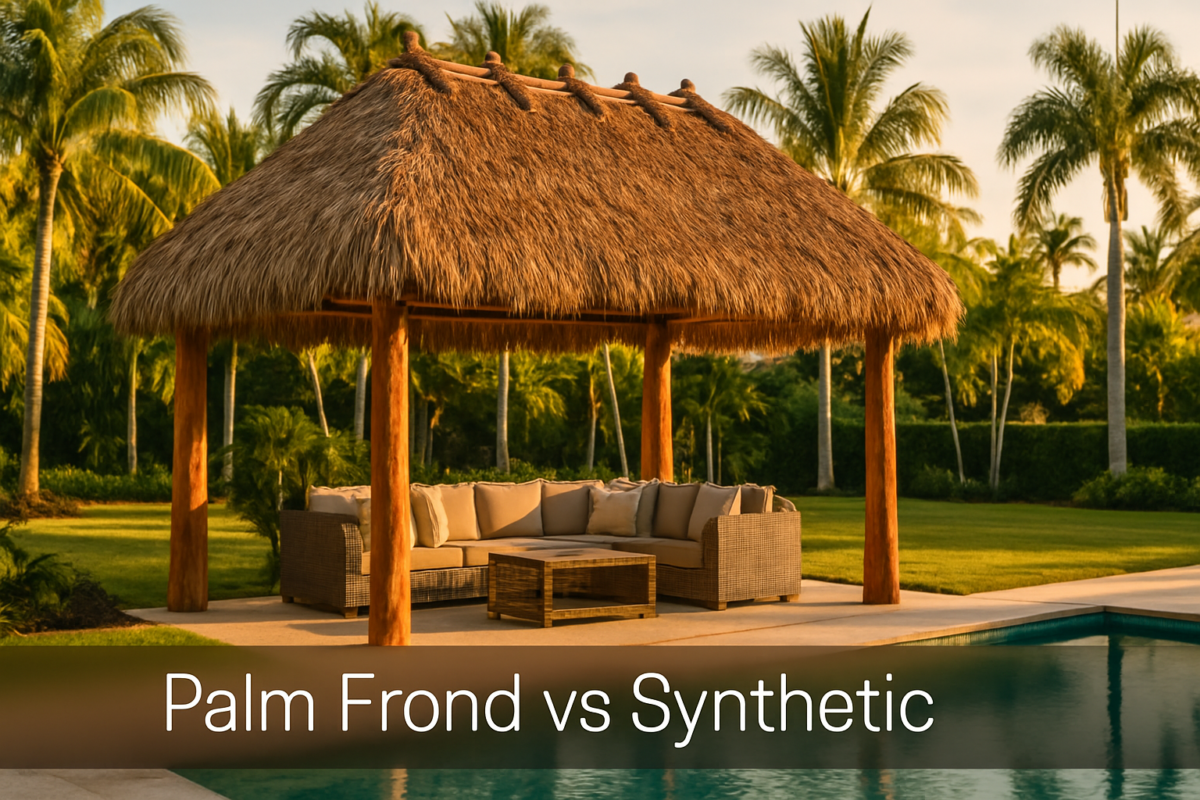
Traditional thatch is the real deal. At Big Kahuna, our authentic huts are built on genuine cypress poles and topped with hand-tied sabal palm fronds, the same natural materials the Seminole people have used in Florida chickees for generations. The result is a roof with depth, texture, and a rich golden-brown color that simply glows at sunset. No two thatched roofs are ever exactly alike, and that handcrafted, one-of-a-kind character is a huge part of the appeal for homeowners in Hollywood and Deerfield Beach who want a true backyard centerpiece rather than something that looks mass-produced.
Beyond the looks, natural palm frond thatch breathes. Air moves freely through the layered fronds, so the space underneath stays surprisingly cool even on a blazing July afternoon. That natural ventilation is one of the big reasons real thatch has remained the gold standard for shade structures in tropical climates for centuries. There is also something to be said for sustainability: sabal palm is a renewable, native Florida resource, and a properly built thatched roof connects your outdoor space to the long history of the region. When people close their eyes and picture a classic Florida tiki hut, this warm, organic, hand-built look is almost always the image in their mind.
The Case for Synthetic Thatch
Synthetic thatch is engineered from UV-stabilized plastic or aluminum strands designed to mimic the look of natural palm fronds. The biggest draw is longevity and low maintenance. A quality synthetic roof can last 20 years or more with very little upkeep, shrugging off heavy rain, high wind, and intense ultraviolet exposure without the periodic re-thatching that natural roofs require. For commercial clients such as restaurants, resorts, beach clubs, and HOA pool areas in Miami and Fort Lauderdale, that long-term predictability is often the single biggest factor in the decision.
Synthetic materials are also fire-rated and naturally resist mold, mildew, insects, and rot, which can make permitting, code compliance, and insurance conversations noticeably simpler for certain commercial properties. The trade-off is in the details. While modern synthetics look better than ever from a few feet away, up close they can lack the organic, layered richness of the real thing, and they do not provide quite the same natural breathability that makes real thatch feel so cool underneath. For many busy property owners, though, the decades of worry-free, set-it-and-forget-it performance more than make up for that small difference in texture.
How Florida Weather Affects Your Choice
Florida is one of the most demanding environments in the country for any outdoor structure. Between the salt-laden coastal breezes, the daily summer downpours, the punishing UV index, and the very real threat of hurricane-season winds, your tiki hut roof has to earn its keep. This is exactly why the palm frond thatch vs synthetic tiki hut conversation matters so much in Florida specifically, far more than it would in a milder climate.
Natural sabal palm thatch is remarkably resilient when it is installed correctly by experienced hands, and it can be repaired or refreshed in sections rather than all at once. Synthetic thatch, on the other hand, is built to hold up to repeated storm cycles with virtually no attention. Properties closer to the water in Deerfield Beach and Hollywood often see more wear than inland builds, so we always factor in your exact location and exposure when we recommend a material. Whichever direction you lean, the quality of the underlying cypress frame and the skill of the installation matter just as much as the thatch on top, and that craftsmanship is where decades of experience really pays off.
Comparing Cost, Lifespan, and Maintenance
When weighing palm frond thatch vs synthetic tiki hut roofing in Florida, it helps to look at the full picture rather than just the sticker price. Natural sabal palm thatch usually has a lower upfront cost and unbeatable authenticity, but it will need re-thatching roughly every five to ten years depending on sun exposure, salt, and weather, especially on huts that take a beating from coastal storms in Deerfield Beach and Hollywood. The good news is that re-thatching is straightforward and far less expensive than a full rebuild, and many homeowners actually enjoy keeping their hut looking fresh over the years.
Synthetic thatch typically costs more to install up front, but its longer lifespan and minimal maintenance can make it the more economical choice over a 20-year horizon, particularly for high-traffic commercial sites where shutting down for maintenance is costly. There is no single right answer here. A homeowner in Miami who loves the natural look and does not mind occasional upkeep may happily choose real fronds, while a resort manager in Fort Lauderdale who wants to set it and forget it may lean synthetic. During your free consultation, we walk through your budget, your property, and how you plan to use the space so the decision fits your life, not someone else’s.
Which Roof Is Right for Your Florida Property?
The best way to choose between palm frond thatch vs synthetic tiki hut roofing in Florida is to think honestly about your priorities. If authenticity, natural cooling, sustainability, and that genuine handcrafted character top your list, real cypress-and-sabal-palm construction is very hard to beat, and it is what we are best known for. If maximum lifespan and the lowest possible maintenance matter most, especially for a high-traffic commercial space, synthetic thatch deserves serious consideration and can be a fantastic long-term investment.
Because every property is different, we use detailed 3D rendering to show you exactly how your finished hut or bar will look before we build a single thing. Whether you are in Miami, Fort Lauderdale, Hollywood, or Deerfield Beach, our decades of experience across both residential and commercial projects mean we can guide you to the right material for your space, your budget, and your vision. Take a look at our portfolio to see both styles in action, and learn more about our team and the craftsmanship behind every build.
Build Your Dream Tiki Hut With Big Kahuna
There is no wrong choice when it comes to palm frond thatch vs synthetic tiki hut roofing in Florida, only the choice that is right for you. With authentic materials, decades of statewide experience, and 3D renderings that take the guesswork out of the process, Big Kahuna Tiki Huts makes it easy to bring island living home. From a cozy backyard chickee to a sprawling commercial tiki bar, we handle it all across the Sunshine State, and we treat every project like it is going in our own backyard.
Ready to turn your backyard into a tropical getaway? Call us today at 1-877-249-4038 or visit palmhuts.com for your free quote. Let’s build something beautiful together.

