
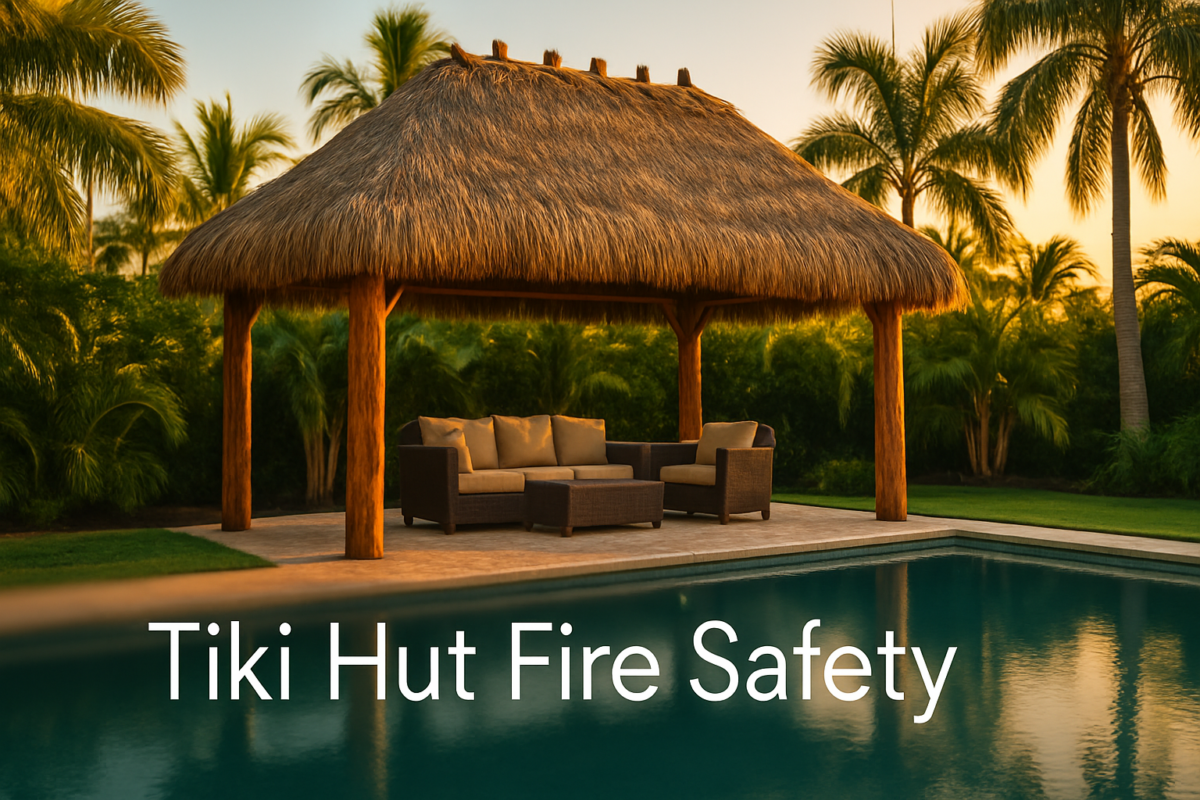
A custom tiki hut turns an ordinary Florida backyard into a shaded, breezy retreat that feels like a permanent vacation. But before you string the lights and fire up the grill nearby, there is one topic every smart owner should understand: tiki hut fire safety. Florida homeowners enjoy these authentic chickee structures year-round, and a little knowledge about materials, spacing, and maintenance goes a long way toward keeping your investment beautiful and worry-free for decades.
At Big Kahuna Tiki Huts, we have built thousands of residential and commercial structures across the state, from the beaches of Tampa and St. Petersburg down to Sarasota and Bradenton. Along the way we have learned exactly what it takes to build an authentic tiki hut that is as safe as it is stunning. This guide walks through the practical steps that make up the tiki hut fire safety Florida homeowners should prioritize from day one.
Are Tiki Huts a Fire Hazard?
Let us clear up the biggest myth first. A properly built tiki hut is not the fire trap some people imagine. Authentic tiki huts are framed with sturdy cypress poles and thatched with hand-tied sabal palm fronds, both natural materials that have sheltered Floridians for centuries. The dried palm thatch can burn if exposed to an open flame, which is exactly why responsible placement and upkeep matter so much.
The vast majority of tiki hut fires are not caused by the structure itself. They start from preventable sources: a grill placed directly beneath the thatch, an unattended fire pit too close to the poles, faulty outdoor wiring, or fireworks. Understand those risks and you have already eliminated most of the danger. That awareness is the real foundation of the tiki hut fire safety Florida homeowners can count on.
Smart Placement: Spacing Is Your First Line of Defense
The single most important fire safety decision happens before construction even begins, when you choose where the hut will stand. We recommend keeping your tiki hut a safe distance from your home, fences, sheds, and any other combustible structures. This buffer protects your hut from a house fire and protects your house from any incident at the hut.
Open-air ventilation is your friend. One reason traditional chickee design has lasted so long in Florida is that the open sides allow heat and smoke to dissipate rather than collect. When our design team plans a project for a homeowner in Tampa or Bradenton, we use 3D rendering to map exactly how the structure sits in relation to the home, pool, and landscaping, so spacing and airflow are dialed in before a single pole goes in the ground.
Keep grills, fire pits, tiki torches, and chimineas well away from the thatch and poles. If you love the idea of a fire feature near your hut, talk to us about safe placement and consider a flame feature designed for the distance. Thoughtful spacing is the cornerstone of the tiki hut fire safety Florida homeowners ask us about most.
Materials and Fire-Retardant Treatments
Authentic materials matter, and so does treating them properly. Big Kahuna builds with genuine cypress poles and natural sabal palm fronds because they deliver the real island look and stand up to Florida weather. For owners who want extra peace of mind, fire-retardant treatments are available that can be applied to the thatch to slow ignition and reduce flame spread.
These treatments are especially worth discussing for commercial properties, rental homes, and any location where local code or an insurance carrier requires them. Fire safety is not one-size-fits-all, and our team can walk you through which treatment options make sense for your specific property in St. Petersburg, Sarasota, or anywhere else in the state. You can see examples of treated and untreated builds in our project portfolio.
Florida Codes, Permits, and Insurance
Florida takes outdoor structures seriously, and tiki huts are no exception. Many counties recognize chickee huts under specific building provisions, particularly when they are built by experienced contractors using traditional methods. Requirements vary between municipalities in the Tampa Bay area, so a structure in Tampa may face slightly different rules than one in Sarasota or Bradenton.
Working with a seasoned builder takes the guesswork out of this. With decades of experience, Big Kahuna understands local permitting and can help ensure your tiki hut meets the standards that keep it both legal and safe. Proper documentation also matters for homeowners insurance, since a professionally built, code-compliant structure is far easier to insure than a questionable DIY job. When in doubt, check with your local building department and your insurance provider before construction. Meeting these standards is a big part of the tiki hut fire safety Florida homeowners depend on for long-term peace of mind.
Maintenance Keeps Your Tiki Hut Safe
A tiki hut is a living structure, and ongoing care is part of responsible ownership. Over the years, palm thatch naturally weathers and thins, and dried debris like leaves can collect on top. Periodic inspection and rethatching not only keep your hut looking sharp, they also remove excess dry material and maintain the roof at its safest, most effective thickness.
A few simple habits go a long way: clear fallen debris from the roof, keep electrical fixtures and outdoor wiring in good repair, never store flammable liquids or propane tanks underneath the hut, and keep a fire extinguisher accessible during gatherings. Routine maintenance like this rounds out the tiki hut fire safety Florida homeowners need to enjoy their backyard with total confidence. When it is time for a refresh, our crew handles rethatching and repairs across the entire Tampa Bay region, including Tampa, St. Petersburg, Sarasota, and Bradenton.
Common Tiki Hut Fire Safety Mistakes to Avoid
Even careful owners slip up, and most incidents trace back to the same short list of avoidable mistakes. The most common is positioning a charcoal or gas grill directly under the thatch to dodge the sun or rain; rising heat and stray sparks have no business near dried fronds. Another is overloading outdoor outlets with string lights, sound systems, and appliances on a single circuit, which can overheat wiring hidden in or near the poles. Owners also tend to forget the roof entirely, letting palm fronds and leaf litter pile up until the thatch is far drier and thicker than it should be.
A final mistake is treating a tiki hut like a permanent storage shed, tucking propane tanks, lighter fluid, or pool chemicals beneath it for convenience. Keep that space clear, keep flames at a respectful distance, and schedule regular inspections. Avoiding these few errors covers the large majority of real-world risk and keeps your backyard centerpiece exactly where it belongs: at the heart of the fun.
Build It Right the First Time
The surest path to a safe tiki hut is hiring a professional who knows Florida inside and out. Big Kahuna Tiki Huts serves residential and commercial clients statewide, combining authentic cypress poles and sabal palm fronds with decades of hands-on experience, 3D rendering, and a deep understanding of local codes. From a cozy backyard chickee in St. Petersburg to a sprawling commercial tiki bar in Sarasota, we build structures designed to be enjoyed safely for years to come. Learn more about our team or browse the portfolio to see what is possible.
Ready to add a stunning, safely built tiki hut to your Florida home? Call Big Kahuna Tiki Huts today at 1-877-249-4038 or visit palmhuts.com for a free quote. Let us help you create the backyard escape you have always wanted, built right and built to last.

