Categories
Tiki Blog

How Florida Hotels and Resorts Use Commercial Tiki Huts to Increase Guest Satisfaction and Revenue

When guests book a Florida resort, they’re not just paying for a room — they’re paying for an experience. And few amenities deliver that tropical experience more powerfully than a custom-built commercial tiki hut. From poolside cabanas at luxury beachfront properties to open-air tiki bars at boutique hotels, commercial tiki huts have become a defining feature of Florida’s hospitality landscape.

At Big Kahuna Tiki Huts, we’ve built commercial tiki structures for some of Florida’s most recognizable names in hospitality — including Ritz Carlton Hotels, Hyatt Resorts, Turnberry Isle Resorts, Wyndham Resorts, and Crowne Plaza Hotels. In this guide, we’ll walk you through exactly how hotels and resorts use tiki huts to drive guest satisfaction and generate measurable revenue.

Why Outdoor Amenities Matter More Than Ever for Florida Hotels

The competition for hotel guests in Florida has never been more intense. With average daily rates (ADR) for Florida hotels sitting at $196.41 in Q2 2025 and RevPAR climbing year-over-year, properties need every edge they can find to justify premium pricing and maintain occupancy.

Research consistently shows that outdoor amenities are a key driver of guest satisfaction and repeat bookings. According to Cornell University research, hotels that raise their online reputation score by just one point can increase room rates by 11.2% without losing occupancy — and outdoor experiences are one of the fastest ways to generate those positive reviews.

“Enticing guests to dine on-property is a huge revenue booster — and guests reward you by sharing photos of your space on social media.” — Tuuci Hospitality Research

For Florida properties specifically, the outdoor environment is a year-round selling point. A well-designed commercial tiki hut transforms underutilized poolside or garden space into a revenue-generating amenity that guests photograph, share, and return for.

5 Ways Commercial Tiki Huts Generate Revenue for Hotel Properties

  1. Outdoor Food & Beverage Revenue

A commercial tiki bar positioned near the pool or beachfront becomes a dedicated F&B revenue center. Guests who might otherwise leave the property for drinks and meals are kept on-site — spending directly with you. Tiki bars create a natural gathering point that extends guest dwell time and increases per-guest spend.

CBRE hospitality data confirms that full-service and resort hotels have seen significant revenue increases from guest amenities like F&B and recreation in recent years — a trend driven largely by leisure travel growth since 2020.

  1. Premium Rate Justification

Distinctive outdoor amenities allow hotels to command higher nightly rates. Properties with well-designed outdoor spaces consistently outperform competitors in both occupancy and guest satisfaction scoring. When a guest sees your tiki hut featured in listing photos or on social media, it becomes a booking driver — one that justifies a premium price point over a competitor with a plain concrete pool deck.

  1. Event and Group Booking Revenue

A custom tiki hut or tiki bandstand is an ideal venue for private events, wedding receptions, corporate gatherings, and poolside parties. Hotels that offer unique outdoor event spaces can charge premium venue fees and attract group bookings that fill multiple rooms simultaneously. We’ve built tiki bandstands and tiki villages specifically designed to serve as event venues for commercial clients.

  1. Social Media and Direct Booking Impact

Visually striking amenities drive organic social media content — guests post photos, tag the property, and effectively market your hotel for free. This social proof translates directly into bookings. A 2025 study found that positive online experiences influence travel decisions for over 70% of potential guests. A beautifully constructed tiki hut is one of the most photographable amenities a Florida resort can offer.

  1. Guest Retention and Repeat Stays

Repeat guests spend approximately 67% more than first-time visitors and cost far less to acquire. When guests associate your property with a memorable outdoor experience — a sunset drink at the tiki bar, a shaded afternoon by the pool — they return. Commercial tiki huts create the kind of “sense of place” that turns a one-time visitor into a loyal guest.

What Makes a Commercial Tiki Hut Different from a Residential Build

Not all tiki huts are built the same. A commercial tiki hut for a hotel or resort is engineered to a completely different standard than a backyard structure — and choosing a builder who understands that difference is critical.

Feature Residential Build Commercial Build
Usage Occasional personal use Daily, high-traffic use
Wind load engineering Standard residential Commercial-grade, county-specific
Size & scale Typically under 400 sq ft Hundreds to thousands of sq ft
Customization Standard options Full custom: bars, sinks, stages, branding
Permitting Residential permit Commercial permit + full insurance required
Maintenance Annual rethatching Scheduled maintenance program

At Big Kahuna Tiki Huts, every commercial build is fully licensed under Florida Contractors License #CBC1259971 and fully insured. We offer architectural and 3D rendering services so hotel and resort clients can visualize and approve the final structure before a single pole goes into the ground.

What to Look for When Choosing a Commercial Tiki Hut Builder in Florida

Before signing a contract with any tiki hut builder for your hotel or resort, ask these questions:

  • Are they licensed? Look for a valid Florida General Contractor or CBC license. Unlicensed builders expose your property to liability and can create insurance and permitting problems.
  • Do they carry full commercial insurance? A hotel property requires a builder with proper liability coverage. Always request a certificate of insurance.
  • Can they handle the scale? A builder experienced in residential work may not have the structural engineering expertise for large commercial builds. Ask for a portfolio of comparable commercial projects.
  • Do they offer rethatching and ongoing maintenance? A commercial tiki hut is a long-term asset. Choose a builder with a maintenance program so your structure stays in peak condition year after year.
  • Are they familiar with Florida’s county-specific wind load requirements? Coastal Florida counties have strict structural requirements. Your builder needs to know them.

Big Kahuna Tiki Huts is a Seminole Exempt builder — meaning many of our structures are exempt from standard permitting requirements, saving commercial clients significant time and cost during the approval process.

Our Commercial Tiki Hut Options for Hotels and Resorts

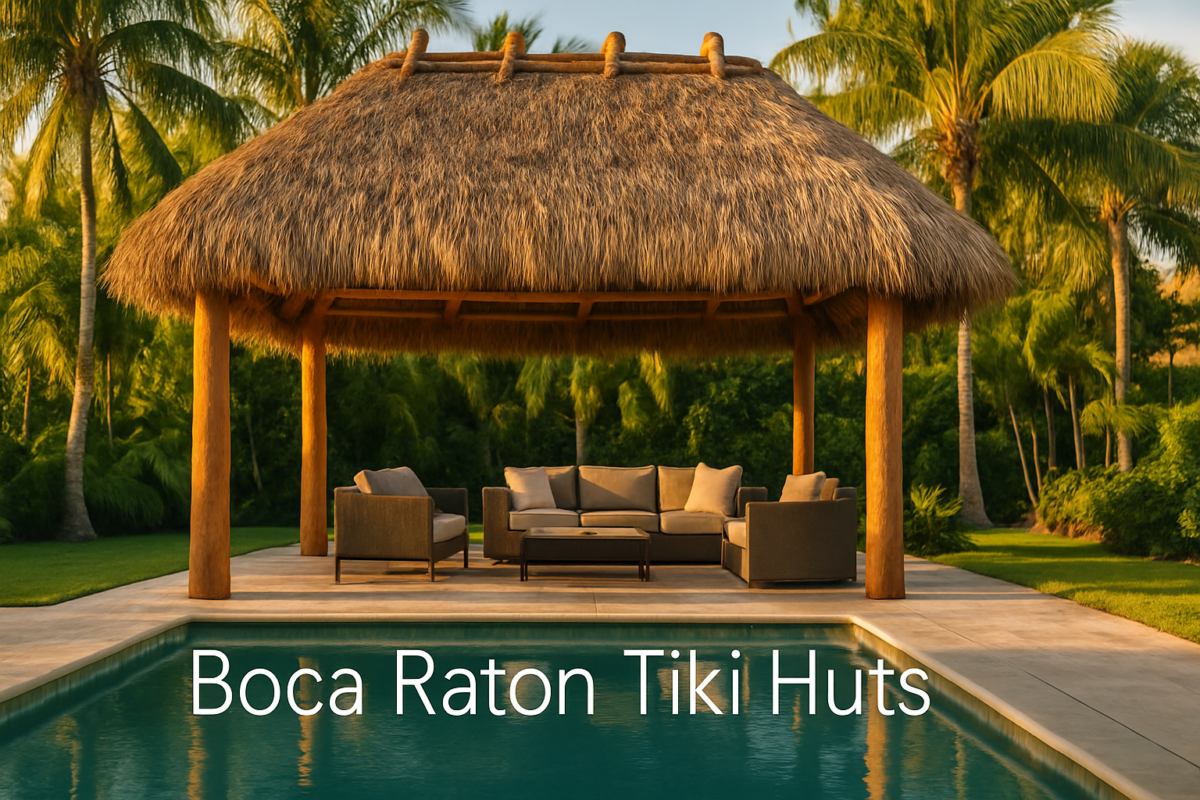
Big Kahuna builds a full range of commercial tiki structures, all constructed from hand-selected Florida native cypress poles and fresh-cut Florida palm fronds. Every structure is custom-designed for the specific property — no two are alike.

  • Poolside tiki huts and cabanas — for shade structures, beverage service, and guest relaxation
  • Commercial tiki bars — with custom countertops, drink rails, sink cut-outs, cabinets, and bamboo or cypress fronts
  • Tiki bandstands — for live entertainment and outdoor event programming
  • Tiki breezeways and awnings — to create covered walkways and entrances with a tropical aesthetic
  • Tiki villages — multiple interconnected structures for large-scale resort installations
  • Custom carved cypress posts — for branded, one-of-a-kind architectural statements

We also offer full rethatching and repair services for existing commercial tiki structures. If your hotel has an aging tiki hut, we can remove the old palm fronds, haul them away, and rethatch with fresh-cut Florida palm fronds — restoring the look and structural integrity of your asset.

Frequently Asked Questions

How long does a commercial tiki hut last? With proper maintenance and regular rethatching, a commercial tiki hut built with cypress poles can last 20–30 years or more. The thatched roof typically needs refreshing every 3–5 years, depending on weather exposure and usage.
Do commercial tiki huts require permits in Florida? Most commercial tiki hut installations require commercial permits and must meet Florida’s structural and wind-load codes. Big Kahuna Tiki Huts handles the permitting process for our clients and, as a Seminole Exempt builder, many of our builds qualify for exemptions that simplify the approval process.
How long does a commercial build take? Timeline varies by project size and complexity. Smaller commercial tiki bars can be completed in days; large resort installations with multiple structures may take several weeks. We provide detailed project timelines during our consultation process.
Can you match our resort’s branding? Yes. We offer custom carving on cypress posts, custom bar configurations, and full 3D architectural rendering so your tiki structure integrates seamlessly with your property’s aesthetic and brand.
Do you service existing tiki huts? Absolutely. We offer rethatching, structural repairs, and full renovation of existing commercial tiki huts throughout Florida. If your current structure needs attention, our team can assess and restore it.

Ready to Elevate Your Guest Experience?

Big Kahuna Tiki Huts has been serving Florida’s hospitality industry for many years. Our client list includes some of the most respected hotel and resort brands in the state — and every project we build is custom-designed, fully licensed, and backed by our full service and repair team.

If you’re a hotel, resort, or commercial property manager looking to enhance your outdoor amenities with a custom commercial tiki hut or tiki bar, we’d love to help you design your vision.

Categories
Tiki Blog

Florida Tiki Huts

**TITLE:** Do I Need a Permit for a Chickee Hut in Florida?
**META DESCRIPTION:** Discover if you need a permit for a Chickee Hut in Florida and learn about local regulations and materials at palmhuts.com.

“`html

Quick Answer

Yes, you need a permit for a Chickee Hut in Florida, but traditional huts built by Miccosukee or Seminole tribes are exempt from the Florida Building Code. However, they must comply with local zoning, setbacks, and electrical/plumbing codes as outlined in Florida Statute 553.73(10)(i).

Understanding Permits for Chickee Huts

At palmhuts.com, we understand that building a Chickee Hut in Florida involves navigating local regulations. While traditional Chickee Huts are exempt from the Florida Building Code, they still need to follow local zoning laws and comply with setback requirements. This ensures that your hut is not only functional but also safe and compliant with local regulations.

As per Florida Statute 553.73(10)(i), if your hut is classified as a “Permanent Structure,” it will require permits. Always consult your local authorities in areas like Fort Myers, Sarasota, Cape Coral, or Port St. Lucie to ensure compliance.

Choosing the Right Materials: Natural vs. Synthetic

When constructing a Chickee Hut, the choice of thatching material is crucial. You typically have two options: Natural Sabal Palm and High-Density Polyethylene (HDPE) Synthetic Thatch. Both have their benefits, depending on your needs and location.

Material Comparison

Feature Natural Sabal Palm High-Density Polyethylene (HDPE) Synthetic Thatch
Authenticity Authentic Florida look Modern appearance
Life Span 5-7 years 20+ years
Cooling Properties Naturally cooling Minimal cooling effect
Fire Rating Not fire-rated Fire-rated
UV Resistance Limited UV-resistant
Wind Resistance Less effective in high winds Preferred in high-wind areas

Benefits of Each Material

  • Natural Sabal Palm: Authentic look, naturally cooling, and environmentally friendly.
  • HDPE Synthetic Thatch: Long-lasting, fire-rated, UV-resistant, and ideal for areas like Tampa, Naples, and the Florida Keys.

Frequently Asked Questions

Do I need a permit for a Chickee Hut in Florida?

Yes, unless it’s a traditional hut built by indigenous tribes, which are exempt from the Florida Building Code.

What are the zoning requirements for a Chickee Hut?

Zoning requirements vary by locality. Consult local building departments in your area for specifics.

How long does it take to build a Chickee Hut?

Construction time varies, but typically it can take a few days to a couple of weeks, depending on size and materials.

Is synthetic thatch better than natural thatch?

Synthetic thatch offers a longer lifespan, better fire rating, and UV resistance, making it a preferred choice in high-wind areas.

“`

**CALL TO ACTION:** “Ready to build your paradise? Call the Palm Huts experts at 1-877-249-4038 or visit palmhuts.com for a free site assessment.”

Categories
Tiki Blog

Building Florida Tiki Huts

**TITLE:** Do I Need a Permit for a Chickee Hut in Florida?

**META DESCRIPTION:** Understand permitting requirements for Chickee huts in Florida and explore material options at Palm Huts.

**CONTENT:**

“`html

Quick Answer

Yes, you need a permit for a Chickee hut in Florida, but traditional Chickee huts built by Miccosukee or Seminole tribes are exempt from the Florida Building Code. However, they must comply with local zoning laws and setbacks, as well as electrical and plumbing codes.

Understanding Permits and Regulations

At palmhuts.com, we prioritize compliance with state regulations. According to Florida Statute 553.73(10)(i), traditional Chickee huts are recognized as exempt from the Florida Building Code. However, this exemption does not negate the necessity for permits regarding local zoning, setbacks, and utility connections. Whether you’re in Fort Myers, Sarasota, Cape Coral, Port St. Lucie, Jupiter, or Boca Raton, understanding these requirements is crucial for a successful build.

Choosing the Right Materials

When it comes to roofing materials, you have two primary options: Natural Sabal Palm and High-Density Polyethylene (HDPE) Synthetic Thatch. Each has its own benefits, making it important to choose the right fit for your needs.

Feature Natural Sabal Palm HDPE Synthetic Thatch
Life Span 5-7 years 20+ years
Cooling Properties Natural cooling None
Fire Rating Not rated Fire-rated
UV Resistance Limited UV-resistant
Wind Resistance Moderate High

Benefits of Each Material

  • Natural Sabal Palm: Authentic Florida look, naturally cooling, and eco-friendly.
  • HDPE Synthetic Thatch: Long-lasting, fire-rated, UV-resistant, and ideal for high-wind areas like Naples and Tampa.

Why Choose Palm Huts?

Our team at Palm Huts specializes in constructing high-quality Chickee huts that meet Florida’s stringent regulations while offering aesthetic appeal. We understand the unique needs of Florida residents, whether you’re located in Cape Coral or Jupiter, and we are here to guide you through every step of the building process.

FAQ

1. Can I build a Chickee hut without a permit?

No, while traditional Chickee huts have some exemptions, you still need to follow local regulations.

2. How long does it take to build a Chickee hut?

Construction time can vary, but typically it takes a few weeks depending on design and materials.

3. What are the benefits of synthetic thatch over natural materials?

Synthetic thatch lasts longer, is fire-rated, and is more suitable for areas with high wind conditions.

4. Are there specific zoning laws for Chickee huts?

Yes, zoning laws vary by locality, so it’s essential to check with your local authorities before construction.

“`

**CALL TO ACTION:** Ready to build your paradise? Call the Palm Huts experts at 1-877-249-4038 or visit palmhuts.com for a free site assessment.

Categories
Tiki Blog

SEO Blog Post: Florida Tiki Huts

**TITLE:** Do I Need a Permit for a Chickee Hut in Florida?

**META DESCRIPTION:** Learn about Chickee hut permits in Florida, including legal requirements and material options from Palm Huts.

**CONTENT:**

“`html

Quick Answer

Yes, you need a permit for a Chickee hut in Florida, unless it’s an authentic Chickee built by Miccosukee or Seminole tribes. While these traditional structures are exempt from the Florida Building Code, they must still comply with local zoning, setbacks, and electrical/plumbing codes. Always consult local regulations for specifics.

Understanding Chickee Huts and Permits

At palmhuts.com, we know that building a Chickee hut is a significant investment. In Florida, permits are crucial for ensuring compliance with local laws. According to Florida Statute 553.73(10)(i), traditional Chickee huts built by Native American tribes are exempt from the Florida Building Code. However, if you’re planning a permanent structure, you must adhere to local zoning laws, setbacks, and electrical and plumbing codes.

Material Options: Natural vs. Synthetic Thatch

When it comes to roofing materials for your Chickee hut, you have two primary options: Natural Sabal Palm and High-Density Polyethylene (HDPE) Synthetic Thatch. Each has its advantages depending on your location and specific needs.

Feature Natural Sabal Palm HDPE Synthetic Thatch
Life Span 5-7 years 20+ years
Fire Rating No Yes
UV Resistance No Yes
Cooling Properties Yes No

Benefits of Each Material

  • Natural Sabal Palm: Authentic aesthetic, naturally cooling, eco-friendly.
  • HDPE Synthetic Thatch: Long-lasting, fire-rated, UV-resistant, ideal for high-wind areas like Naples and Tampa.

Service Areas

Our team at Palm Huts proudly serves multiple locations throughout Florida, including:

  • Fort Myers
  • Sarasota
  • Cape Coral
  • Port St. Lucie
  • Jupiter
  • Boca Raton

FAQs

Do I need a permit for a Chickee hut in Florida?

Yes, unless it’s an authentic Chickee built by a Native American tribe.

What are the benefits of using synthetic thatch?

Synthetic thatch offers a longer lifespan, fire resistance, and UV protection, making it ideal for areas prone to high winds.

Can I build a Chickee hut without professional help?

While DIY is possible, hiring professionals ensures compliance with local regulations and enhances quality.

How long does it take to build a Chickee hut?

The time frame can vary, but typical builds take 2-4 weeks depending on design and materials.

“`

**CALL TO ACTION:** Ready to build your paradise? Call the Palm Huts experts at 1-877-249-4038 or visit palmhuts.com for a free site assessment.

Categories
Tiki Blog

SEO Blog Post: Florida Tiki Huts

**TITLE:** Do I Need a Permit for a Chickee Hut in Florida?

**META DESCRIPTION:** Find out if you need a permit for a Chickee hut in Florida, including local zoning laws and materials comparison.

**CONTENT:**

“`html

Quick Answer

No permit is required for traditional Chickee huts built by Miccosukee or Seminole tribes under Florida Statute 553.73(10)(i). However, these structures must comply with local zoning laws, setbacks, and electrical/plumbing codes. For non-tribal huts, a permit is generally needed.

Understanding Permits and Regulations

At palmhuts.com, we prioritize compliance with Florida’s building regulations. While traditional Chickee huts are exempt from the Florida Building Code, they are classified as a Permanent Structure rather than a Temporary Shade. Local jurisdictions, such as Fort Myers, Sarasota, and Cape Coral, have specific zoning requirements that must be followed. It’s crucial to consult local authorities to ensure your Chickee hut meets all necessary codes.

The Thatch Debate: Natural vs. Synthetic

Choosing the right thatch material for your Chickee hut is vital for longevity and resilience. Our team at Palm Huts often compares two popular materials:

Feature Natural Sabal Palm High-Density Polyethylene (HDPE) Synthetic Thatch
Authenticity Authentic Florida material Modern synthetic alternative
Life Span 5-7 years 20+ years
Fire Resistance No Yes
UV Resistance No Yes
Cooling Properties Yes No

Benefits of Each Material

When deciding between natural and synthetic thatch, consider the following:

  • Natural Sabal Palm: Eco-friendly, aesthetically pleasing, and naturally cooling.
  • HDPE Synthetic Thatch: Fire-rated, UV-resistant, long-lasting, and ideal for high-wind areas like Naples, Tampa, and the Florida Keys.

Conclusion

Whether you’re looking to build a traditional Chickee hut or a modern version, understanding the regulations and material options is essential. For a hassle-free experience, consult with our experts at Palm Huts, who have extensive experience in Florida’s unique building environment.

FAQ Section

  • What are the zoning requirements for a Chickee hut in Florida? Always check with local authorities for specific regulations regarding zoning and setbacks.
  • Can I build a Chickee hut in my backyard? Yes, but you must comply with local zoning laws and permit requirements.
  • How long does it take to build a Chickee hut? The timeline can vary, but typically it takes a few weeks from start to finish.
  • Is maintenance required for a Chickee hut? Yes, regular maintenance is recommended, especially for natural thatch.

“`

**CALL TO ACTION:** Ready to build your paradise? Call the Palm Huts experts at 1-877-249-4038 or visit palmhuts.com for a free site assessment.