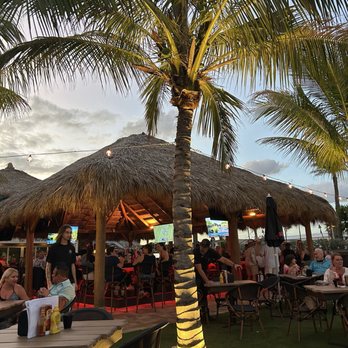
Click on the start button to check out a video of some of our beautiful tiki huts and tiki bars custom built for clients throughout the state of Florida.
Category: Tiki Blog
Take a look at this beautiful Tiki Hut that Big Kahuna Tiki Huts built for Shooters in Fort Lauderdale, FL!
Click on the start button to view the video of the tiki hut Big Kahuna Tiki Huts built for Shooters Restaurant in Ft. Lauderdale FL.
Click on the start buttons to view a video of a custom built tiki hut and bar railing for a client in Coral Springs FL.
Video of Tiki Hut build
Click on the start buttons to check out the videos of the build on one of the beautiful tiki huts Big Kahuna Tiki Huts built.
Big Kahuna Tiki Huts & Tiki Bars built a tiki hut at Tradition Field. Tradition Field is the home of the New York Mets Spring Training. It is located in Port St. Lucie, Florida and the stadium capacity is over 7,000.
The tiki hut is 30 by 11 feet and over 2,500 fresh cut Florida palm fronds were used to create the custom built structure. The tiki hut adds a tropical panache to the Florida stadium.
During spring training baseball games, sport fans can find shade under the tiki hut while enjoying a cold drink from the bar.
“`html
Tiki Hut Setback Requirements by Florida County
Quick Answer
In Florida, tiki hut setback requirements vary by county. Understanding these regulations is crucial for compliance. Whether you’re in Ocala, Gainesville, The Villages, or Leesburg, ensure you check local guidelines before construction. Companies like Big Kahuna Tiki Huts can help navigate these rules.
Understanding Setback Requirements in Florida Counties
Setback requirements are regulations that dictate how far a structure must be from property lines. These rules ensure safety, accessibility, and community aesthetics. In Florida, each county has its own requirements, which can vary significantly. It’s important for homeowners and business owners to understand these local regulations to avoid fines and ensure the safety of their structures.
Ocala and Gainesville
In Ocala and Gainesville, setback requirements for tiki huts can differ. Typically, these areas require a setback of at least 10 feet from property lines. However, specific neighborhood covenants may impose additional restrictions. Consulting with experts like Big Kahuna Tiki Huts can provide clarity and ensure compliance with local laws.
The Villages and Leesburg
For those in The Villages and Leesburg, setback requirements might be more stringent due to the planned community layouts. It’s common to find rules that require tiki huts to be set back 15 feet or more from the property line. Checking with local zoning offices or visiting resources like palmhuts.com can offer guidance specific to your location.
FAQs on Tiki Hut Setback Requirements
- What is a setback requirement?
A setback requirement is a regulation that determines how far a structure must be from property lines or other structures.
- Do setback requirements apply to all types of structures?
Yes, setback requirements generally apply to all structures, including tiki huts, to ensure safety and compliance with local zoning laws.
- How can I find out the setback requirements for my county?
Consult your local zoning office or check online resources such as palmhuts.com for specific county requirements.
- Can companies like Big Kahuna Tiki Huts assist with setback regulations?
Absolutely, companies specializing in tiki huts, like Big Kahuna Tiki Huts, are well-versed in local regulations and can guide you through the process.
“`
A custom tiki hut turns an ordinary Florida backyard into a shaded, breezy retreat that feels like a permanent vacation. But before you string the lights and fire up the grill nearby, there is one topic every smart owner should understand: tiki hut fire safety. Florida homeowners enjoy these authentic chickee structures year-round, and a little knowledge about materials, spacing, and maintenance goes a long way toward keeping your investment beautiful and worry-free for decades.
At Big Kahuna Tiki Huts, we have built thousands of residential and commercial structures across the state, from the beaches of Tampa and St. Petersburg down to Sarasota and Bradenton. Along the way we have learned exactly what it takes to build an authentic tiki hut that is as safe as it is stunning. This guide walks through the practical steps that make up the tiki hut fire safety Florida homeowners should prioritize from day one.
Are Tiki Huts a Fire Hazard?
Let us clear up the biggest myth first. A properly built tiki hut is not the fire trap some people imagine. Authentic tiki huts are framed with sturdy cypress poles and thatched with hand-tied sabal palm fronds, both natural materials that have sheltered Floridians for centuries. The dried palm thatch can burn if exposed to an open flame, which is exactly why responsible placement and upkeep matter so much.
The vast majority of tiki hut fires are not caused by the structure itself. They start from preventable sources: a grill placed directly beneath the thatch, an unattended fire pit too close to the poles, faulty outdoor wiring, or fireworks. Understand those risks and you have already eliminated most of the danger. That awareness is the real foundation of the tiki hut fire safety Florida homeowners can count on.
Smart Placement: Spacing Is Your First Line of Defense
The single most important fire safety decision happens before construction even begins, when you choose where the hut will stand. We recommend keeping your tiki hut a safe distance from your home, fences, sheds, and any other combustible structures. This buffer protects your hut from a house fire and protects your house from any incident at the hut.
Open-air ventilation is your friend. One reason traditional chickee design has lasted so long in Florida is that the open sides allow heat and smoke to dissipate rather than collect. When our design team plans a project for a homeowner in Tampa or Bradenton, we use 3D rendering to map exactly how the structure sits in relation to the home, pool, and landscaping, so spacing and airflow are dialed in before a single pole goes in the ground.
Keep grills, fire pits, tiki torches, and chimineas well away from the thatch and poles. If you love the idea of a fire feature near your hut, talk to us about safe placement and consider a flame feature designed for the distance. Thoughtful spacing is the cornerstone of the tiki hut fire safety Florida homeowners ask us about most.
Materials and Fire-Retardant Treatments
Authentic materials matter, and so does treating them properly. Big Kahuna builds with genuine cypress poles and natural sabal palm fronds because they deliver the real island look and stand up to Florida weather. For owners who want extra peace of mind, fire-retardant treatments are available that can be applied to the thatch to slow ignition and reduce flame spread.
These treatments are especially worth discussing for commercial properties, rental homes, and any location where local code or an insurance carrier requires them. Fire safety is not one-size-fits-all, and our team can walk you through which treatment options make sense for your specific property in St. Petersburg, Sarasota, or anywhere else in the state. You can see examples of treated and untreated builds in our project portfolio.
Florida Codes, Permits, and Insurance
Florida takes outdoor structures seriously, and tiki huts are no exception. Many counties recognize chickee huts under specific building provisions, particularly when they are built by experienced contractors using traditional methods. Requirements vary between municipalities in the Tampa Bay area, so a structure in Tampa may face slightly different rules than one in Sarasota or Bradenton.
Working with a seasoned builder takes the guesswork out of this. With decades of experience, Big Kahuna understands local permitting and can help ensure your tiki hut meets the standards that keep it both legal and safe. Proper documentation also matters for homeowners insurance, since a professionally built, code-compliant structure is far easier to insure than a questionable DIY job. When in doubt, check with your local building department and your insurance provider before construction. Meeting these standards is a big part of the tiki hut fire safety Florida homeowners depend on for long-term peace of mind.
Maintenance Keeps Your Tiki Hut Safe
A tiki hut is a living structure, and ongoing care is part of responsible ownership. Over the years, palm thatch naturally weathers and thins, and dried debris like leaves can collect on top. Periodic inspection and rethatching not only keep your hut looking sharp, they also remove excess dry material and maintain the roof at its safest, most effective thickness.
A few simple habits go a long way: clear fallen debris from the roof, keep electrical fixtures and outdoor wiring in good repair, never store flammable liquids or propane tanks underneath the hut, and keep a fire extinguisher accessible during gatherings. Routine maintenance like this rounds out the tiki hut fire safety Florida homeowners need to enjoy their backyard with total confidence. When it is time for a refresh, our crew handles rethatching and repairs across the entire Tampa Bay region, including Tampa, St. Petersburg, Sarasota, and Bradenton.
Common Tiki Hut Fire Safety Mistakes to Avoid
Even careful owners slip up, and most incidents trace back to the same short list of avoidable mistakes. The most common is positioning a charcoal or gas grill directly under the thatch to dodge the sun or rain; rising heat and stray sparks have no business near dried fronds. Another is overloading outdoor outlets with string lights, sound systems, and appliances on a single circuit, which can overheat wiring hidden in or near the poles. Owners also tend to forget the roof entirely, letting palm fronds and leaf litter pile up until the thatch is far drier and thicker than it should be.
A final mistake is treating a tiki hut like a permanent storage shed, tucking propane tanks, lighter fluid, or pool chemicals beneath it for convenience. Keep that space clear, keep flames at a respectful distance, and schedule regular inspections. Avoiding these few errors covers the large majority of real-world risk and keeps your backyard centerpiece exactly where it belongs: at the heart of the fun.
Build It Right the First Time
The surest path to a safe tiki hut is hiring a professional who knows Florida inside and out. Big Kahuna Tiki Huts serves residential and commercial clients statewide, combining authentic cypress poles and sabal palm fronds with decades of hands-on experience, 3D rendering, and a deep understanding of local codes. From a cozy backyard chickee in St. Petersburg to a sprawling commercial tiki bar in Sarasota, we build structures designed to be enjoyed safely for years to come. Learn more about our team or browse the portfolio to see what is possible.
Ready to add a stunning, safely built tiki hut to your Florida home? Call Big Kahuna Tiki Huts today at 1-877-249-4038 or visit palmhuts.com for a free quote. Let us help you create the backyard escape you have always wanted, built right and built to last.
Across Florida, homeowners associations and condo boards are competing harder than ever to attract residents and boost property values. One amenity keeps rising to the top of the wish list: a beautiful, shaded gathering spot that captures the laid-back island lifestyle people move to the Sunshine State for. That is exactly why a commercial tiki hut for your HOA or condo association in Florida has become one of the smartest upgrades a community can make. It is durable, eye-catching, and instantly transforms an ordinary pool deck or common area into a resort-style destination.
At Big Kahuna Tiki Huts, we have spent decades building authentic chickees for communities up and down the state, from Southwest Florida’s coastal condos to inland HOA clubhouses. In this guide, we will walk through why these structures make so much sense for shared spaces, what sets a true commercial-grade build apart, and how we help your board navigate approvals from start to finish.
Why HOA Communities and Condo Associations Are Choosing Commercial Tiki Huts
Shared amenities are the heartbeat of any well-run community. When residents have a comfortable, shaded place to gather, the entire neighborhood feels more connected, and that translates directly into resident satisfaction and stronger property values. A commercial tiki hut delivers all of this with a fraction of the maintenance of a traditional roofed pavilion.
For condo associations along the Gulf Coast, a tiki hut by the pool or boardwalk gives residents a breezy escape from the midday sun without blocking those coveted water views. For inland HOA communities, a chickee over an outdoor kitchen or near the clubhouse creates a natural hub for events, weekend hangouts, and HOA-sponsored gatherings. Choosing a commercial tiki hut for an HOA or condo association in Florida also signals to prospective buyers and renters that the community invests in lifestyle, not just landscaping.
Just as important, these structures are built to handle heavy, ongoing use. Unlike a backyard hut that hosts the occasional family cookout, a community tiki hut sees daily traffic, so it needs to be engineered for the long haul. That is where commercial-grade construction matters. You can see examples of our community installations in our project portfolio.
What Makes a Commercial Tiki Hut Built for Shared Spaces
Not all tiki huts are created equal, and the difference is night and day when a structure has to serve dozens or hundreds of residents. A residential build prioritizes charm; a commercial build has to deliver charm and serious structural integrity.
Every commercial project we take on starts with authentic materials: hand-selected cypress poles for the frame and genuine sabal palm fronds for the roof. Cypress is naturally rot- and insect-resistant, which is critical for structures exposed to Florida’s humidity, salt air, and afternoon downpours. The sabal palm frond roof, hand-tied by experienced thatchers, sheds rain beautifully and keeps the space remarkably cool even at peak summer heat.
For an HOA or condo association, we also scale the design to match expected use. That can mean wider spans for larger crowds, reinforced posts, integrated lighting, ceiling fans, and built-in seating or bar areas. Because we handle both commercial and residential work, we know how to right-size a build so it looks gorgeous and stands up to years of community events.
Navigating HOA Approvals, Permits, and Florida Building Codes
One of the biggest hesitations boards have is the paperwork, and we get it. Adding any structure to a shared community involves architectural review committees, association bylaws, and local permitting. The good news is that we have done this many times and we make the process painless.
Before construction begins, we provide detailed 3D renderings so your board, architectural committee, and residents can see exactly what the finished tiki hut will look like in your space. This visual is invaluable for getting buy-in at community meetings and for securing approval from your HOA or condo association in Florida without the usual back-and-forth.
We also build to code. Authentic chickees enjoy unique status under Florida building regulations, and our team understands the wind-load, setback, and permitting requirements that apply to commercial installations. We coordinate with your property management company and local building departments so your association can move forward with confidence. Have questions about your specific community? Reach out through our contact page and we will walk you through it.
Serving Southwest Florida Communities From Naples to Sanibel
Southwest Florida is one of our favorite regions to work in, and it is home to some of the state’s most amenity-rich communities. We regularly build commercial tiki huts for HOA communities and condo associations across Naples, Fort Myers, Marco Island, and Sanibel Island.
In Naples, gated golf and lakefront communities use our chickees to elevate clubhouse pool decks and resident lounges. Over in Fort Myers, condo associations along the river and Gulf love how a tiki hut frames the water without obstructing views. On Marco Island and Sanibel Island, where the coastal, tropical aesthetic is everything, an authentic palm-frond roof feels right at home and holds up beautifully against salt air and sea breezes. Wherever your community sits, we serve all of Florida, so distance is never an obstacle.
Because we are a Florida company through and through, we understand the regional building requirements, the look residents expect, and the timelines associations work within. That local expertise is part of what makes a commercial tiki hut for your HOA or condo association such a dependable investment.
Design Options and Long-Term Value for Your Community
Part of the appeal of a commercial tiki hut is how flexible it is. We can build a single open-air chickee for a quiet poolside lounge, or a larger structure that anchors an entire amenity zone with an outdoor kitchen, bar seating, and entertainment space. Many associations pair their tiki hut with paver patios, string lighting, and comfortable lounge furniture to create a true outdoor living room their residents return to again and again.
And because these structures use authentic, natural materials, they age gracefully. When the sabal palm roof eventually needs refreshing after years of Florida weather, our re-thatching service restores it to like-new condition for a fraction of the cost of a full rebuild. That long lifespan, combined with low ongoing maintenance, is exactly why so many boards view a commercial tiki hut for an HOA or condo association as a sound, lasting investment rather than a passing trend.
The Big Kahuna Difference
Communities choose Big Kahuna Tiki Huts because we combine old-school craftsmanship with modern professionalism. Our decades of experience mean we have seen and solved virtually every challenge a community project can throw at us. Our 3D rendering process removes the guesswork. And our commitment to authentic cypress poles and sabal palm fronds ensures your tiki hut is the real deal, not a synthetic imitation that fades and disappoints.
We treat every association like a long-term partner. From the first site visit and design concept through permitting, construction, and future re-thatching service, we are there to keep your community’s centerpiece looking its best for years to come. Learn more about our company and the craftsmen behind every build.
Ready to Bring Resort-Style Living to Your Community?
A commercial tiki hut is more than an amenity. It is a gathering place, a property-value booster, and a statement that your community embraces the very best of the Florida lifestyle. Whether you manage a sprawling HOA or a beachfront condo association, Big Kahuna Tiki Huts has the experience, materials, and craftsmanship to bring your vision to life.
Call us today at 1-877-249-4038 or visit palmhuts.com for a free quote. Let’s build something your residents will love for decades to come.