Categories
Tiki Blog

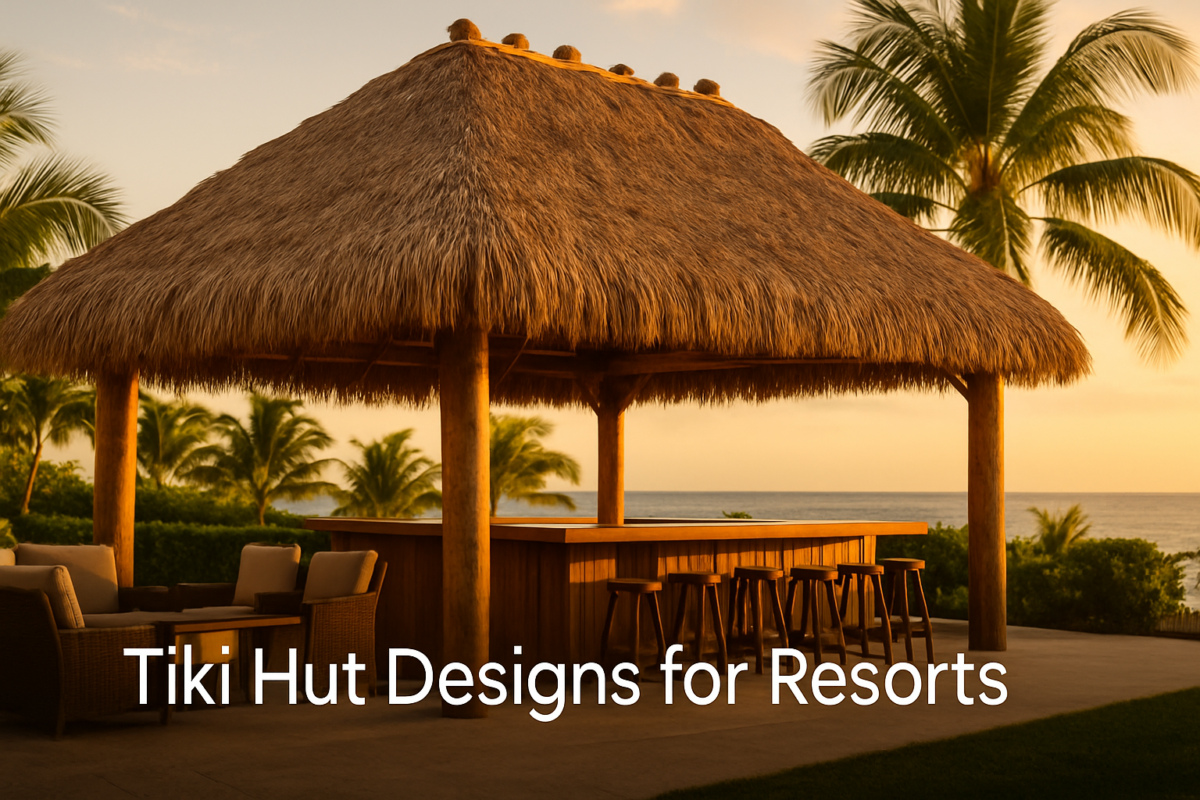
Best Tiki Hut Designs for Florida Restaurants and Resorts

When guests step off the Florida sun and into the shade of a hand-thatched roof, something changes. They slow down, order another round, and stay a little longer. That is the magic the best tiki hut designs for Florida restaurants and resorts deliver every single day, and it is exactly why so many hospitality owners across Tampa Bay are adding authentic chickees to their properties. At Big Kahuna Tiki Huts, we have spent decades helping restaurants, resorts, pool decks, and beachfront bars turn ordinary outdoor space into the kind of tropical destination people drive across town to enjoy.

If you own or manage a hospitality property in Tampa, St. Petersburg, Clearwater, or Sarasota, the right tiki structure is more than decoration. It is a revenue-generating, brand-defining centerpiece. Below, we walk through the tiki hut designs that work best for Florida hospitality, the materials that make them last, and how our team brings a vision to life from first sketch to grand opening.

Why Tiki Huts Work So Well for Florida Hospitality

Florida is built for outdoor living, but the same sun that draws tourists can chase them indoors by noon. A well-placed tiki hut solves that problem instantly. The deep, naturally insulating palm-frond roof drops the temperature underneath by several degrees, creating a comfortable, shaded gathering spot without walls to block the breeze or the view. For restaurants and resorts, that means more usable square footage, more covered seating, and a signature look that photographs beautifully for social media.

There is also the atmosphere. A genuine chickee carries an authentic, laid-back island feel that no umbrella or pergola can match. It signals to guests that they have arrived somewhere special. Across Tampa Bay, we have watched a single tiki bar transform a quiet patio into the busiest seat in the house. That is the return on investment that makes tiki hut designs for Florida restaurants and resorts such a smart move for hospitality owners.

Top Tiki Hut Designs for Restaurants and Resorts

No two properties are alike, so we tailor every build to the space and the brand. A few designs consistently rise to the top for commercial clients:

The signature tiki bar. A full-service tiki bar with a thatched roof, bar top, and built-in seating is the crown jewel of any resort pool deck or waterfront restaurant. We size these from intimate four-stool nooks to sprawling multi-station bars that serve hundreds.

The dining pavilion. Larger open-air chickees shelter entire dining areas, perfect for restaurants in Clearwater and St. Petersburg that want to expand covered seating without a costly building permit for permanent walls.

The poolside lounge. Resorts in Sarasota love compact tiki huts that shade lounge chairs, daybeds, and cabana service near the water, giving guests a cool retreat between dips in the pool.

The entry statement. A striking tiki structure at a resort entrance or restaurant host stand sets the tropical tone before guests ever sit down, reinforcing your brand the moment they arrive.

Whatever direction you choose, the best tiki hut designs for Florida restaurants and resorts balance beauty with function, durability, and full code compliance for commercial use.

Authentic Materials That Define a Big Kahuna Build

The difference between a tiki hut that looks incredible for twenty years and one that sags after two comes down to materials and craftsmanship. Big Kahuna builds the real thing: sturdy cypress poles that resist rot and weather Florida storms, topped with hand-tied sabal palm fronds harvested and woven the traditional way. This is the same time-tested construction the Seminole people have used for generations, and it is what gives our chickees their authentic look and remarkable longevity.

Cheap imitations use synthetic thatch or untreated lumber that fades, leaks, and disappoints. Our authentic cypress and sabal palm builds breathe naturally, shed Florida rain, and age gracefully. For a commercial property where guests notice every detail, that authenticity protects both your reputation and your investment.

Designing for Your Space: From Tampa Bars to Sarasota Resorts

Great tiki hut design starts with understanding the space. A rooftop bar in downtown Tampa has very different wind, drainage, and load considerations than a beachfront resort deck in Clearwater or a lakeside restaurant near Sarasota. Our team evaluates your site, traffic flow, and seating goals before we ever propose a layout, so the finished structure feels like it was always meant to be there.

Because we handle both residential and commercial work all across Florida, we bring a deep playbook of what performs in real hospitality settings: where to place the bar so staff can move efficiently, how to size the roof for maximum shade, and how to integrate lighting, fans, and electrical for evening service. The result is a tiki hut that is not only gorgeous but genuinely easy to operate night after night.

From 3D Rendering to Grand Opening

One of the biggest worries for any owner is committing to a build without knowing how it will look. We remove that uncertainty with detailed 3D rendering. Before a single pole goes in the ground, you will see a realistic model of your tiki hut in your actual space, letting you adjust size, placement, and finishes with total confidence. For multi-stakeholder decisions at restaurants and resorts, those renderings make approvals fast and painless.

From there, our experienced crews handle the build with the speed and professionalism commercial timelines demand. We have completed projects of every scale across Tampa, St. Petersburg, Clearwater, Sarasota, and the entire state, and we manage the process so your property stays on schedule for opening day. You can browse real examples of completed projects in our portfolio, learn more about our story on our about page, or reach out anytime through our contact page.

Bring Your Tropical Vision to Life

The best tiki hut designs for Florida restaurants and resorts do more than provide shade. They create an experience, extend your usable space, and give guests a reason to come back again and again. With authentic cypress-and-palm construction, decades of commercial and residential experience, detailed 3D rendering, and statewide service, Big Kahuna Tiki Huts is the partner Tampa Bay hospitality owners trust to get it right.

Ready to turn your patio, pool deck, or waterfront into a destination? Call Big Kahuna Tiki Huts today at 1-877-249-4038 or visit palmhuts.com for a free quote. Let us build you a tiki hut your guests will never forget.
Categories
Tiki Blog

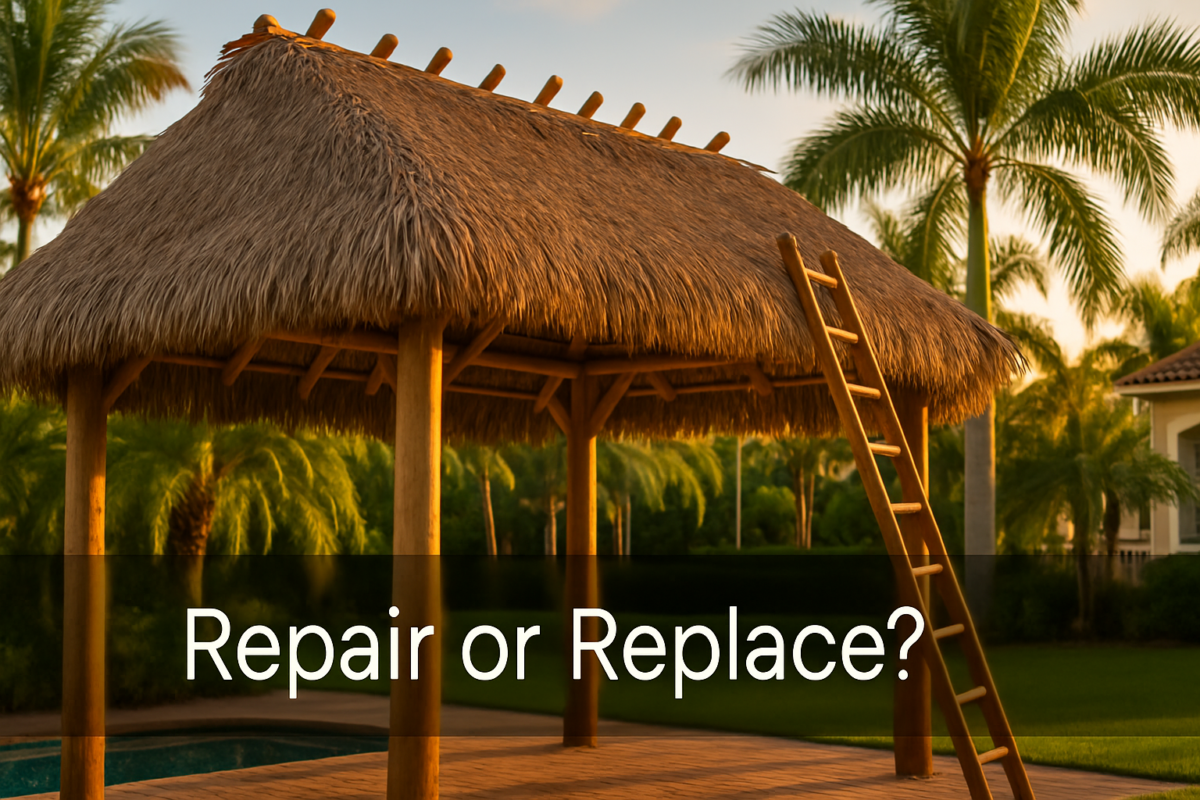
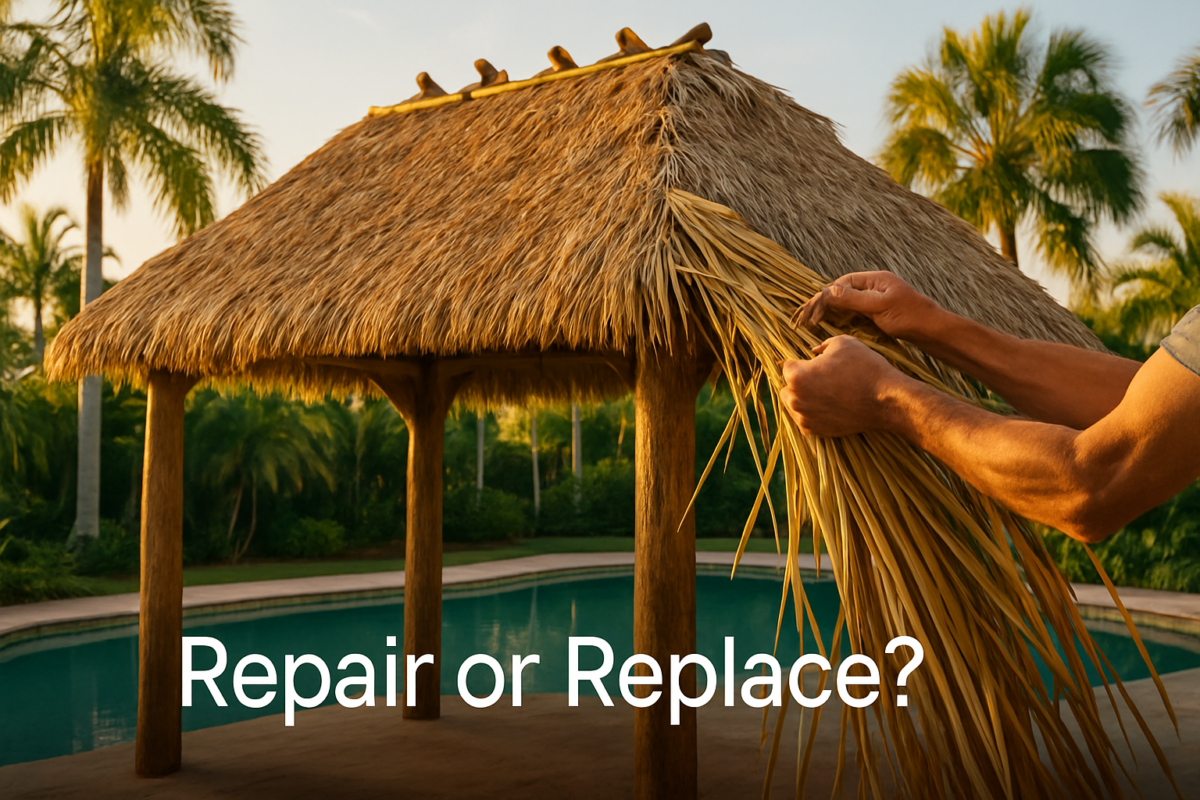
Tiki Hut Rethatching in Florida: When to Repair vs. Replace Your Palm Roof

If you own a tiki hut or tiki bar anywhere from Naples to Fort Myers, you already know how much character a hand-thatched palm roof adds to a backyard, pool deck, or commercial patio. You also know that South Florida’s sun, salt air, wind, and rain are relentless. Sooner or later, every palm-frond roof reaches the point where the question stops being “does it still look good?” and starts being “do I patch it, or replace the whole thing?” This guide on tiki hut rethatching repair in Florida walks you through exactly how to tell the difference — and what to expect either way.

At Big Kahuna Tiki Huts, we’ve been rebuilding and restoring chickee-style roofs across Southwest Florida for decades. We’ve seen what survives a hurricane and what doesn’t, what looks tired but has years of life left, and what’s quietly rotting from the inside. Here’s the same honest framework we use when we walk a property in Naples, Marco Island, Cape Coral, or Fort Myers.

How Long Should a Palm-Frond Roof Last in Florida?

A properly built sabal palm roof typically lasts 7 to 12 years in Florida, depending on three things: the quality of the original thatching, sun exposure, and how close the structure is to salt water. Inland properties tucked under tree cover get the most life; oceanfront commercial properties in Marco Island or beachfront homes in Fort Myers Beach are usually on the shorter end of that window.

Cypress posts and structural framing, on the other hand, can last 25 years or more when properly milled and installed — which is why a roof can wear out long before the bones of your tiki hut need any attention at all. That distinction is what makes rethatching such a smart investment: you’re not rebuilding the hut, you’re refreshing the part that takes the weather.

5 Signs Your Tiki Hut Needs Rethatching Repair

Before deciding between a spot repair and a full re-thatch, take a walk around your hut on a sunny afternoon. Here’s what to look for:

  1. Visible daylight through the roof. Pinholes are normal in a brand-new thatch; large patches of sky are not. If you can see distinct shafts of sunlight on the ground beneath the hut at noon, your fronds have thinned out.
  2. Dripping or “rain dust” after a storm. A healthy palm roof sheds water in sheets. If you’re getting active drips — or fine wet debris falling from above during rain — water is finding paths through the layers.
  3. Brittle, gray, or crumbling fronds along the edges. The bottom rows take the worst of the sun. When they start snapping off in your hand instead of bending, the UV damage is widespread.
  4. Sagging sections or visible “valleys” in the roofline. Sagging usually means the underlying ties have rotted or the fronds above have compressed. Either way, it’s a structural concern, not just a cosmetic one.
  5. Storm damage from a recent named storm. Even a glancing tropical storm can lift edge fronds, break tie-downs, or expose ridge caps. Florida homeowners should get a quick post-storm inspection every season.

If you’re noticing one or two of these and the rest of the roof looks tight, you’re a strong candidate for a targeted tiki hut rethatching repair in Florida. If you’re nodding along to three or more, it’s time to talk about a full re-thatch.

Repair vs. Replace: How the Decision Actually Gets Made

Most homeowners assume that bigger problems automatically mean a full replacement and smaller problems mean a patch. In reality, the decision is driven by three questions:

1. How old is the existing roof? If your thatch is under five years old and you’ve got isolated damage from a single storm or a falling branch, a spot repair is almost always the right call. We can lace in new sabal fronds, retie sections, and color-match the patch so it disappears within a few weeks of weathering. If your roof is already 8+ years old, patching a small area only postpones the inevitable — and you’ll pay for the labor twice.

2. Is the damage at the ridge or along the edges? Ridge damage is serious. The ridge cap is the high point of the roof, and once water gets in there, it travels down through every layer. Edge damage is usually contained to the bottom courses and is much easier to repair without disturbing the rest of the thatch.

3. What’s the structure used for? A residential tiki hut over a poolside lounge area has different priorities than a commercial tiki bar at a Cape Coral marina or a Fort Myers restaurant. Commercial properties usually opt for full re-thatches on a planned schedule rather than emergency repairs, because every day of downtime affects revenue.

What’s Involved in a Professional Re-thatch

A true tiki hut re-thatch isn’t just “throwing new fronds on top.” When our crews show up at a property in Naples or Marco Island, here’s the typical sequence:

First, we inspect the cypress framing. If we find any compromised posts or beams — rare, but it happens — we address those before any thatch goes up. Then we strip the old fronds completely down to the structure. We re-tie the cross-laths with marine-grade fastening, then begin courses of fresh, hand-selected sabal palm fronds from the bottom up, overlapping each row generously so water has no way in. The ridge gets a custom cap, and the edges are trimmed clean for a finished look.

A typical residential re-thatch takes 1 to 3 days, depending on the size and pitch. Commercial structures can run a week or more. In every case, our crews leave the site clean — and your hut looking like the day it was built.

Why Authentic Materials Matter (and Why “Cheap” Rethatching Costs More)

Florida has plenty of contractors who’ll quote you a low number for a palm roof. What you usually don’t see in those quotes is what they’re using: imported synthetic fronds, mexican palm instead of native sabal, or staples instead of hand-tied lashings. Those roofs look fine on day one — and start failing in 18 months.

At Big Kahuna Tiki Huts, every project uses authentic cypress poles and native sabal palm fronds, hand-tied the traditional Seminole way. It’s the same construction method that’s stood up to a century of Florida weather on properties across the state, and it’s the reason our work is approved for both residential and commercial use under Florida’s chickee exemption.

Get a Free, No-Pressure Quote for Your Roof

Whether you’re in Naples, Marco Island, Cape Coral, or Fort Myers — or anywhere else in Florida — the easiest way to know whether you need a repair or a full re-thatch is to have an experienced builder take a look. We offer free inspections and free 3D renderings for new builds, and we’ll give you a straight answer about what your roof actually needs (not what would be easiest to sell you).

Take a look at our portfolio to see recent tiki huts and tiki bars we’ve built and restored across the state, learn more about Big Kahuna, or head straight to our contact page for a free quote.

Call us today at 1-877-249-4038 or visit palmhuts.com to get your tiki hut ready for another decade of Florida living.

Categories
Tiki Blog

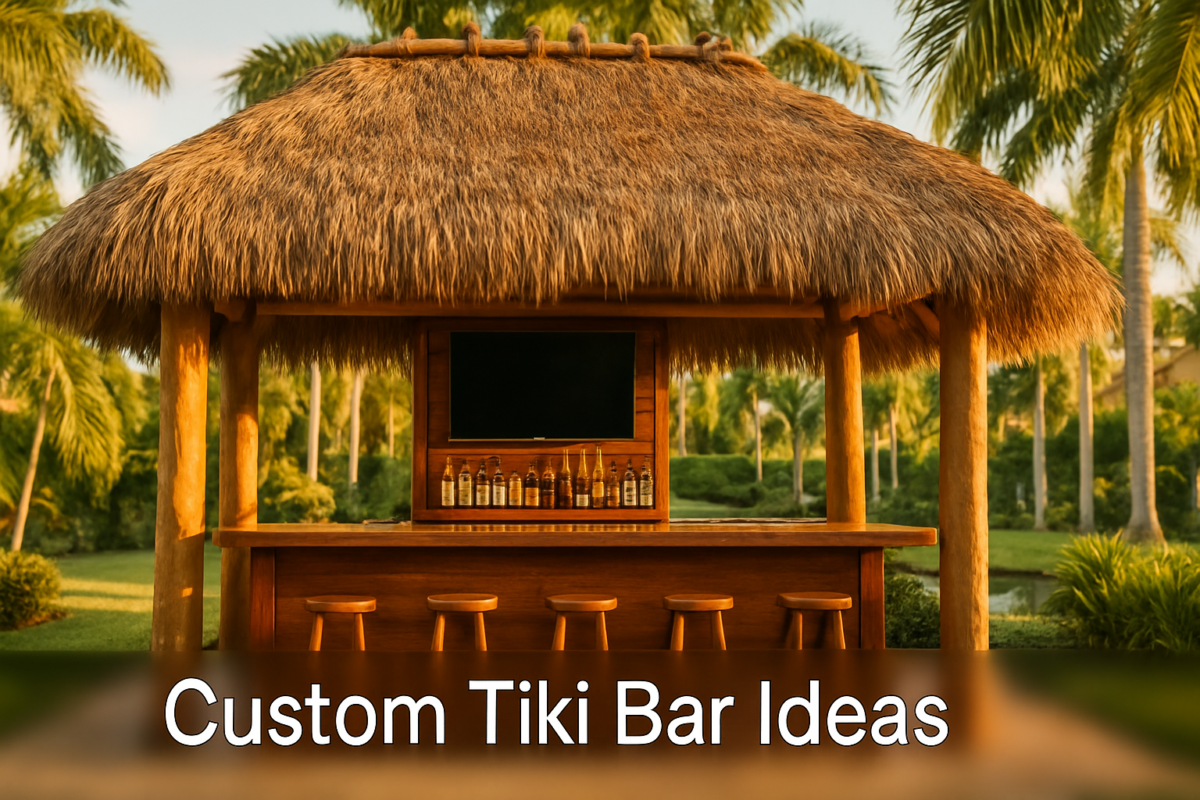
10 Custom Tiki Bar Ideas for Your Florida Backyard

There’s something undeniably magical about stepping into your backyard and being instantly transported to a tropical paradise. If you’ve been dreaming of custom tiki bar ideas Florida backyard owners can actually pull off, you’re in the right place. At Big Kahuna Tiki Huts, we’ve spent decades helping homeowners across Florida turn ordinary patios into the kind of outdoor gathering spaces neighbors talk about for years.

Whether you’re in Orlando, Daytona Beach, Melbourne, or Kissimmee, the year-round Florida sunshine practically begs for an authentic tiki bar — and we’re going to walk you through the design ideas, materials, and features that make our builds stand apart. Grab a cold drink and a notepad. By the end of this guide, you’ll have a clear vision for your own backyard escape.

Why a Custom Tiki Bar Is the Perfect Florida Backyard Upgrade

Florida’s climate is tailor-made for outdoor entertaining. Long evenings, warm breezes, and barely-there winters mean a backyard tiki bar gets used twelve months out of the year — not the three or four you’d squeeze out of a similar build up north. That’s why custom tiki bar ideas for Florida backyards have exploded in popularity from Central Florida out to the coast.

A well-built tiki bar isn’t just a place to mix drinks. It’s a focal point — a place where Sunday football, birthday parties, retirement celebrations, and quiet sunset moments all happen. Done right, it can also add real, measurable value to your home. Properties in Orlando and Kissimmee with high-quality outdoor entertaining areas consistently photograph better and sell faster than comparable homes without them. Buyers in today’s Florida market specifically search for backyards that feel like vacation destinations, and a tiki bar delivers on that promise instantly.

And there’s the lifestyle payoff. Instead of driving to a beach bar or hotel pool whenever you want that island feeling, you walk twenty steps out your back door. That’s a quality-of-life upgrade you feel every single day.

The Big Kahuna Difference: Authentic Cypress and Sabal Palm

Not all tiki bars are created equal. Walk through a few Florida neighborhoods and you’ll see plenty of pressed-wood imitations or vinyl-thatch knockoffs that fade, warp, and look tired within a couple of seasons. What we build is fundamentally different.

Every Big Kahuna tiki bar uses authentic Florida cypress poles — naturally rot-resistant, beautifully grained, and rated to handle the heat, humidity, and the occasional hurricane. The roof is hand-tied with genuine sabal palm fronds — the same species the Seminole tribe has used for centuries — giving you a roof that breathes, sheds rain, and looks like it grew there.

This authenticity matters in places like Melbourne and Daytona Beach where salty coastal weather puts inferior materials through the wringer. Our chickee-style construction has been refined over generations and has earned us the trust of homeowners, resorts, and restaurants all over the state. Take a few minutes to browse our portfolio and you’ll see what authentic craftsmanship actually looks like.

10 Custom Tiki Bar Ideas to Inspire Your Florida Backyard

Here are some of the most popular custom tiki bar ideas Florida backyard owners are bringing to life right now — every single one buildable on residential lots from Orlando to the Atlantic coast:

  1. The Poolside Pavilion Bar. A full-height tiki hut with a wraparound bar facing your pool — perfect for swim-up service and afternoon shade.
  2. The Outdoor Kitchen + Tiki Bar Combo. Built-in grill, pizza oven, and refrigeration tucked beneath an authentic palm-thatched roof.
  3. The Sports Lounge Tiki. Mounted weatherproof TVs, surround sound, and a deep U-shaped bar — game day, every day.
  4. The Sunset Cocktail Lounge. West-facing build with comfortable swivel stools, ambient string lighting, and a glass-front rum display.
  5. The Family Hangout Hut. Open-sided design with bench seating, ceiling fans, and a kid-friendly snack bar — a hit with Kissimmee and Orlando families.
  6. The Lake or Riverfront Build. Stilted construction with built-in dock access — ideal for Melbourne and Daytona Beach waterfront properties.
  7. The Compact Corner Tiki. A smaller footprint for tighter lots, with all the authentic materials and zero compromise on charm.
  8. The Resort-Style Cabana Bar. Multi-section build with separate lounge, bar, and storage — common for luxury Central Florida estates.
  9. The Eco-Friendly Garden Bar. Integrated with native landscaping, solar lighting, and rainwater runoff — sustainable and stunning.
  10. The Custom Themed Build. Old Florida fish camp, Polynesian retreat, Cuban cantina — we’ve built them all.

The beautiful thing about working with us is that nothing on that list is off-limits. We’ve done builds for under $10,000 and we’ve done six-figure resort-style installations. Whatever your budget and lot size, there’s a custom tiki bar idea waiting for your Florida backyard.

From 3D Rendering to Backyard Reality

Here’s something most tiki builders won’t offer: before we cut a single pole, we send you a custom 3D rendering of your build. You’ll see exactly how your tiki bar will sit in your yard — angles, dimensions, materials, finishes, even where the sun will hit at 4 PM — and we revise the design with you until it’s exactly right. No surprises. No guesswork. No regret two weeks after the crew leaves.

That process is a big part of why our clients in Orlando, Kissimmee, Daytona Beach, and Melbourne keep referring us to their neighbors and coworkers. Once you can visualize the finished product, the decision becomes easy — and the build itself becomes exciting rather than stressful.

Residential, Commercial, and Everything in Between

Big Kahuna isn’t just for homeowners. We’ve built tiki bars and chickee huts for resorts, hotels, restaurants, golf clubs, country clubs, and city parks across Florida. Whether you’re a homeowner in Melbourne wanting a backyard upgrade or a property manager in Daytona Beach planning a guest-facing pool bar, our team handles permitting, design, sourcing, and installation start to finish.

That commercial experience benefits residential clients in a big way. The same crew that builds resort-grade hurricane-rated chickee huts in South Florida is the crew showing up in your backyard. You get the same materials, the same techniques, and the same standards. Learn more about our team and the kind of work we love.

Ready to Build Your Florida Backyard Tiki Bar?

The best part of working with Big Kahuna Tiki Huts? We make the process simple. Tell us what you want, share a few photos of your space, and we’ll come back with a free quote and a 3D rendering. From there, our crew handles the build — usually in a single visit — and you’re hosting your first sunset cocktail within weeks.

If you’ve been kicking around custom tiki bar ideas for your Florida backyard, this is your sign to make it real. Call us today at 1-877-249-4038 or request a free quote online. We serve all of Florida — including Orlando, Daytona Beach, Melbourne, and Kissimmee — with the same authentic cypress, hand-tied palm fronds, and decades of craftsmanship that have made us the state’s most trusted tiki builder.

Your backyard paradise is closer than you think. Let’s build it together.

Categories
Tiki Blog

Adding a tiki hut to your pool deck

“`html


Adding a Tiki Hut to Your Pool Deck in Sarasota, Bradenton, Siesta Key, and Longboat Key

Adding a Tiki Hut to Your Pool Deck in Sarasota, Bradenton, Siesta Key, and Longboat Key

Quick Answer

Installing a tiki hut on your pool deck can transform your outdoor space into a tropical paradise. This guide provides homeowners in Sarasota, Bradenton, Siesta Key, and Longboat Key with practical steps for a successful installation, featuring insights from experts like Big Kahuna Tiki Huts.

Why Install a Tiki Hut?

Adding a tiki hut to your pool deck is not just about aesthetics; it’s about enhancing your outdoor living experience. Here are some reasons why you should consider it:

  • Shade and Comfort: Tiki huts provide natural shade, making your pool deck more comfortable during hot Florida summers.
  • Unique Ambiance: Create a tropical oasis that offers a relaxing atmosphere for you and your guests.
  • Increased Property Value: A well-installed tiki hut can boost the value of your home, making it an attractive feature for potential buyers.

Steps to Installing a Tiki Hut

1. Planning and Design

Begin by determining the size and style of your tiki hut. Consider the layout of your pool deck and how the tiki hut will integrate with existing structures. Consulting with professionals like Big Kahuna Tiki Huts can provide valuable insights into design options.

2. Choosing the Right Materials

Select high-quality materials to ensure durability. Palm thatch is a popular choice for roofing due to its natural look and weather resistance. Companies like palmhuts.com offer a variety of options to suit your design preferences.

3. Professional Installation

Hiring experienced installers is crucial for a successful project. Professionals ensure that the structure is safe, secure, and compliant with local building codes. In areas like Sarasota and Bradenton, local expertise can make a significant difference.

FAQs About Tiki Hut Installation

How long does it take to install a tiki hut?

The installation timeline can vary based on the size and complexity of the project but typically ranges from a few days to a week.

What maintenance does a tiki hut require?

Regular maintenance includes checking for any damage to the thatch and structure, as well as cleaning to prevent mold and mildew.

Can a tiki hut withstand Florida weather?

Yes, when properly constructed with quality materials, tiki huts are designed to withstand Florida’s weather conditions, including sun, rain, and wind.

Do I need a permit to build a tiki hut?

Permit requirements vary by location. It’s advisable to check with local authorities in Sarasota, Bradenton, Siesta Key, or Longboat Key to ensure compliance.


“`

Categories
Tiki Blog

Tiki Hut Rethatching Repair in Florida: When to Patch vs. Replace Your Palm Roof

If you own a tiki hut in Southwest Florida, you already know our slice of paradise has a way of wearing things out. Salt air, summer downpours, blazing UV, and the occasional tropical storm all team up against your sabal palm thatch. The good news? A tiki hut roof is built to be revived. The trick is knowing when a quick patch will do and when a full re-thatch is the smarter investment.

After decades of building, refreshing, and rescuing tiki huts from Naples to Marco Island and across Cape Coral and Fort Myers, we’ve seen every stage of palm-roof aging. This guide walks you through what’s actually happening up there, the telltale signs to watch for, and how to decide between a targeted tiki hut rethatching repair Florida homeowners often need and a full rebuild.

How a Florida Tiki Hut Roof Actually Wears Out

A genuine chickee-style hut isn’t just decorative. Hand-tied sabal palm fronds shed rainwater, vent heat, and shrug off humidity — but they’re a natural material, and like any natural material baking under the Florida sun, they have a lifespan.

Three forces drive the aging process. UV exposure dries out the upper layer of fronds, turning them silvery-gray over time. That patina is normal — but underneath, the fibers are slowly losing flexibility. Wind events, especially the Gulf-side gusts that hit Naples and Marco Island during summer storms, work loose the outermost row of palm tips. Once a few fronds break free, water gets behind the remaining layers and accelerates wear. And finally, animal activity — squirrels, birds, the occasional raccoon — can pull individual fronds out as nesting material. One pulled frond won’t sink your roof, but ten will.

The combined effect is gradual. Most well-built tiki huts in our climate need a touch-up every 3 to 5 years and a full rethatching every 8 to 12 years, depending on exposure.

Signs You Just Need a Rethatching Repair

Not every tired-looking tiki hut needs a tear-down. In fact, most of the rethatching calls we get from Cape Coral and Fort Myers turn out to be repairs, not replacements. Here are the signs that point toward a targeted fix:

Localized thinning. If only one face of the roof — usually the windward side — looks patchy while the rest still has body, you almost certainly need a partial tiki hut rethatching repair Florida specialist can blend right into the existing thatch. Done well, the seam disappears within a season.

Small leaks during heavy rain. Pinhole drips in one or two spots usually mean a few fronds have shifted. A trained crew can lift and re-tie the affected section, weave in fresh sabal palm, and have you weatherproof again within a day.

Storm damage. After a tropical system or strong squall, you may notice fronds peeled back at the edges or a lifted ridge. That kind of damage is almost always repairable when it’s caught quickly. The longer it sits open, the more underlying material gets compromised — so the speed of your call matters more than the size of the damage.

If you’re seeing any of these signs in the Naples or Marco Island area, a single-visit repair can save you from a much larger expense down the line.

When Full Replacement Beats Patching

There comes a point where patching only delays the inevitable. Here’s how we know it’s time for a full re-thatch instead of another repair:

Roof-wide thinning. When the thatch has lost its body across the entire structure — you can see daylight through it from underneath, or it has that “tired pillow” sag — patching just adds weight to a structure that’s ready for a clean start.

Repeated leaks in different spots. If you’re chasing leaks every rainy season and they keep popping up in new places, the underlying weave has failed. Layering fresh fronds on top of a failing base traps moisture and shortens the life of the new work.

Old-style construction. Some older tiki huts in Cape Coral and Fort Myers were originally built with non-cypress posts or with thinner thatch density than today’s standards. When you’re already calling for repairs, it’s worth upgrading to authentic cypress poles and a denser sabal palm canopy at the same time. The math almost always favors the upgrade.

Visible structural concerns. Bowing rafters, cracked posts, or rusted strapping mean the issue isn’t just the roof. A full rebuild lets us inspect the bones, replace anything compromised, and re-thatch on a structure you can trust for the next decade.

A complete rethatching project takes 1 to 3 days for most residential huts and gives you a brand-new appearance, full water-tightness, and a reset on the maintenance clock — usually for less than the cost of multiple back-to-back repairs.

How Big Kahuna Approaches Tiki Hut Rethatching Repair in Florida

When our crew rolls into Naples, Marco Island, Cape Coral, or Fort Myers for a rethatching job, the process is the same whether you’ve called for a quick repair or a full replacement.

We start with an in-person inspection. A photo can hint at the issue, but Florida’s salt air and humidity hide damage in ways that only an in-hand evaluation reveals. From there, we walk you through what we found, what’s salvageable, and what isn’t — no upselling, no guesswork.

Authentic materials make the difference. We only use cypress poles and hand-tied sabal palm fronds with proper Florida sourcing. Cypress resists rot in a way pressure-treated lumber simply doesn’t, and authentic sabal palm has a natural oil that sheds water far better than mass-produced synthetic thatch. If your project needs structural work, we’ll also bring 3D rendering to the conversation so you can see exactly what your refreshed hut will look like before we touch a single frond. It’s a small thing that takes a lot of stress out of the decision — and it’s why so many homeowners across Southwest Florida choose us when their tiki hut rethatching repair Florida options feel overwhelming.

Maintenance Tips to Stretch the Life of Your Palm Roof

You can add years to your tiki hut between rethatching jobs with a few simple habits:

Trim back overhanging branches. Anything that drops debris or rubs the thatch is shortening its life. A 4-foot clearance around the entire roof line is a good rule.

Rinse off salt buildup once or twice a year, especially if you’re on the water in Marco Island or near the Gulf in Naples. A garden hose at low pressure is enough — never a pressure washer.

Schedule a quick inspection every 2 to 3 years. We can spot small issues before they become repair-or-replace decisions, and a 30-minute walkaround often pays for itself many times over.

Don’t ignore wildlife. If birds or squirrels are pulling at the thatch, address it early — bird netting along the ridge or a small deterrent can prevent a slow-motion disaster.

These small steps keep your hut looking sharp and push every dollar of your original investment further into the future.

Repair, Replace, or Just Get a Look — We’re Here to Help

Tiki hut rethatching is part art, part craftsmanship, and 100% about understanding the Florida climate it has to live in. Whether your roof needs a touch-up after a stormy season or a full refresh after a decade of faithful service, the right call starts with an honest evaluation. A trustworthy tiki hut rethatching repair Florida partner will tell you when patching is plenty — and when it isn’t.

Big Kahuna Tiki Huts has been building, repairing, and rethatching authentic tiki huts and tiki bars across Southwest Florida — including Naples, Marco Island, Cape Coral, and Fort Myers — for decades. We bring authentic cypress poles, hand-tied sabal palm, decades of field experience, and the same care to a single repair as we do to a full commercial build.

Ready to talk through your project? Call us at 1-877-249-4038 or visit palmhuts.com for a free, no-pressure quote. You can also browse our portfolio to see recent rethatching work, learn more about our team, or contact us directly. Your tiki hut still has plenty of paradise left in it — let’s make sure it stays that way.

Categories
Tiki Blog

Tiki hut vs screened enclosure: full comparison

“`html


Tiki Hut vs Screened Enclosure: Cost Comparison in Florida

Quick Answer

If you’re considering outdoor structures in Florida, tiki huts and screened enclosures offer unique benefits. In Fort Myers, Cape Coral, Bonita Springs, and Lehigh Acres, costs vary significantly. Tiki huts generally offer a more affordable and natural option compared to screened enclosures. Let’s delve deeper into the specifics.

Cost Comparison: Tiki Huts vs Screened Enclosures in Florida

When it comes to enhancing outdoor spaces in Florida areas like Fort Myers, Cape Coral, Bonita Springs, and Lehigh Acres, both tiki huts and screened enclosures provide valuable options. However, their costs differ based on several factors.

Tiki Huts

Tiki huts, known for their tropical aesthetic and natural materials, typically have a lower initial cost. Companies like Big Kahuna Tiki Huts offer customized solutions that can suit various budgets. The use of materials like palm thatch helps in keeping the costs down while providing excellent shade and ambiance.

Screened Enclosures

Screened enclosures, on the other hand, are generally more expensive due to the need for durable framing and screening materials. They provide a more structured environment that can protect against insects and debris, but this comes with a higher price tag. Installation and maintenance costs can also add up over time.

Factors Influencing Costs

Several factors influence the cost of both tiki huts and screened enclosures in Florida:

  • Materials: Tiki huts use natural materials like wood and thatch, while screened enclosures require metal and screening.
  • Labor: Skilled labor is needed for both, but the complexity of screened enclosures often results in higher labor costs.
  • Maintenance: Tiki huts typically require less maintenance, reducing long-term costs.

Choosing the Right Option for Your Florida Property

Deciding between a tiki hut and a screened enclosure depends on your priorities, such as cost, aesthetics, and functionality. For those seeking a cost-effective and natural look, tiki huts are an excellent choice. Companies like Big Kahuna Tiki Huts and resources like palmhuts.com offer guidance and installation services tailored to Florida’s climate and style preferences.

FAQs

  • What is the average cost of a tiki hut in Florida? The average cost varies based on size and design but typically ranges from $1,500 to $15,000.
  • How does the cost of a screened enclosure compare? Screened enclosures can start around $5,000 and go up significantly, depending on the size and materials.
  • Are tiki huts durable in Florida’s climate? Yes, when built with quality materials like those from Big Kahuna Tiki Huts, they can withstand Florida’s weather conditions.
  • Where can I find more information on tiki huts? Websites like palmhuts.com provide valuable insights and resources for building and maintaining tiki huts.


“`

Categories
Tiki Blog

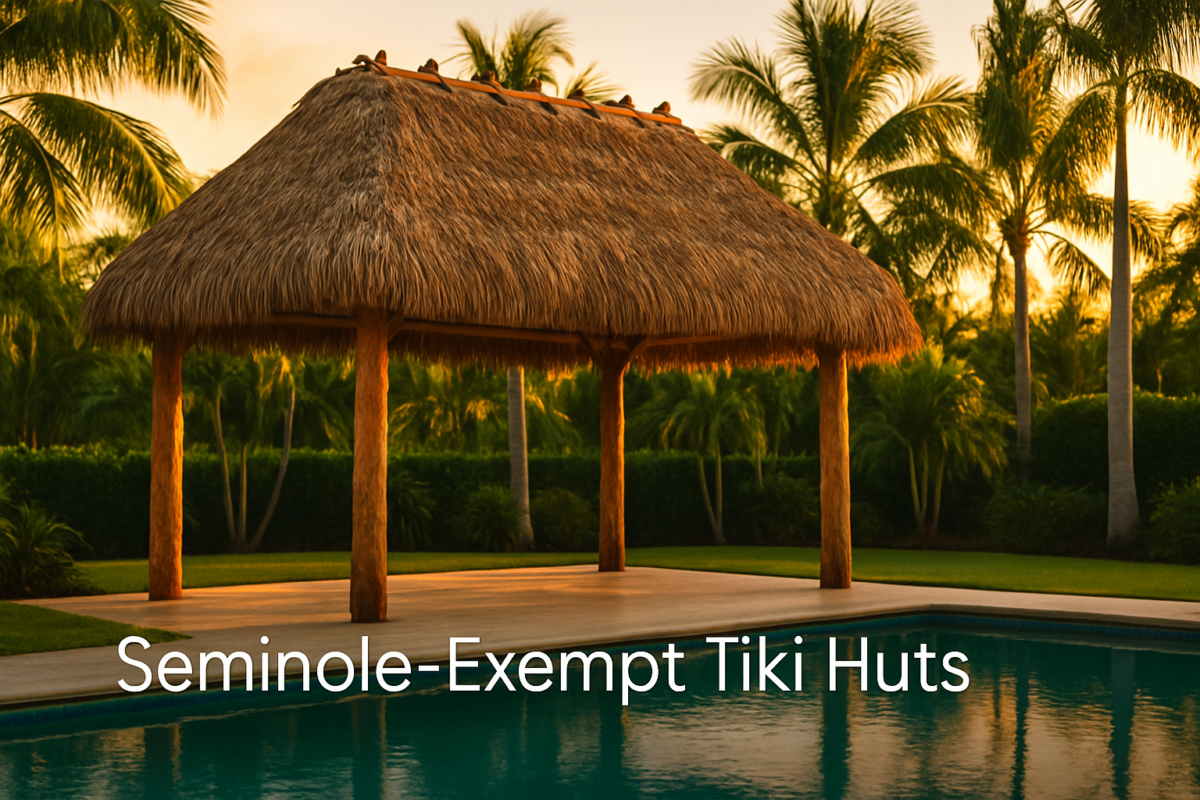
What Does Seminole-Exempt Mean for Tiki Hut Construction in Florida?

If you’ve started shopping for a backyard tiki hut in South Florida, you’ve probably run into a phrase that sounds more like government red tape than tropical paradise: “Seminole-exempt.” It comes up in permit conversations, contractor quotes, and HOA debates from Miami to Fort Lauderdale, and most homeowners only get a half-answer. So let’s clear it up. Understanding Seminole exempt tiki hut construction Florida rules is the difference between a quick, painless install and weeks of permit headaches — and it’s the single biggest reason authentic chickees remain so popular across Boca Raton, Pompano Beach, and the rest of South Florida.

At Big Kahuna Tiki Huts, we’ve been building authentic chickees up and down the state for decades, and “Is this Seminole-exempt?” is one of the first questions every smart homeowner asks. Here’s the straight answer.

What Seminole-Exempt Actually Means

Florida Statute 553.73(10)(c) carves out a specific exception in the Florida Building Code for traditional Native American chickees. In plain English: a chickee built using authentic materials and traditional methods by members of the Miccosukee Tribe or the Seminole Tribe of Florida is not subject to the Florida Building Code in the same way a permanent structure is. That’s why you’ll hear contractors and county officials use the shorthand “Seminole-exempt” or “chickee-exempt.”

To qualify, the structure must meet a clear definition: an open-sided wooden hut with a thatched roof of palm or palmetto fronds, no electrical wiring, no plumbing, and no non-wood structural features. It cannot have enclosed walls. It cannot be built on a permanent foundation that classifies it as a habitable structure. And — this part trips a lot of people up — it has to be built by a member of the Seminole or Miccosukee tribe to fall under the exemption.

That last requirement is exactly why working with the right builder matters. Not every “tiki hut company” qualifies. The team at Big Kahuna Tiki Huts partners with tribal craftsmen so the structures we deliver in South Florida actually meet the legal definition — not just the marketing one.

Why South Florida Homeowners Care About the Exemption

If you live in Miami-Dade, Broward, or Palm Beach County, you already know how strict the building permit process can be. Hurricane codes, setback rules, impact-resistant materials, engineering stamps — adding a permanent outdoor structure usually means a stack of paperwork and a few hundred to several thousand dollars in fees before a single post goes in the ground.

Seminole exempt tiki hut construction in Florida sidesteps most of that. Because authentic chickees fall outside the Florida Building Code, they typically don’t require a building permit in the traditional sense. That means:

  • No long permit waits while your backyard sits in limbo
  • No engineering plans drawn up for a non-permanent structure
  • No permit fees stacking on top of the build cost
  • Faster installation — most of our chickees go up in a day or two

For homeowners in Miami, Fort Lauderdale, Boca Raton, and Pompano Beach who want a real tiki hut over a pool deck, patio, or backyard lounge area, the exemption is what keeps the project simple and affordable.

What the Exemption Doesn’t Cover

Here’s where we have to be straight with you, because we’ve seen plenty of homeowners get burned by contractors who oversell the exemption. Seminole-exempt status applies to the chickee itself — the cypress posts and the woven palm-frond roof. It does not automatically override every local rule.

Specifically, you still need to think about:

  • HOA covenants. If you live in a deed-restricted community in Boca Raton or a gated neighborhood in Fort Lauderdale, your HOA can still require approval for any backyard structure. The state exemption doesn’t change a contract you signed with your HOA.
  • Local zoning and setbacks. Most South Florida counties still expect chickees to respect property line setbacks, easement boundaries, and pool safety zones. We always design around those rules.
  • Electrical add-ons. The moment you add a ceiling fan, lights, an outlet, or a TV mount, you’ve added something that’s not exempt. Those electrical components require a separate permit and a licensed electrician — and we strongly recommend handling that the right way.
  • Commercial use. Restaurants, resorts, and bars using a chickee as part of a business operation may face additional fire-marshal or health-department review depending on the city.

The good news: a quality builder walks you through every one of these before the first cypress pole is delivered. We’ve helped clients in Pompano Beach navigate HOA boards and worked with restaurant owners in Miami on commercial chickee installations. It’s part of the job.

How Authentic Construction Actually Works

People sometimes assume “Seminole-exempt” is a loophole — like the structure must be flimsy to qualify. The opposite is true. Authentic chickees have weathered Florida storms for centuries because the construction is genuinely engineered for this climate.

The core of every Big Kahuna chickee is hand-selected cypress poles, sourced and prepared the traditional way. Cypress is naturally rot-resistant and stands up to humidity, salt air, and termites better than pressure-treated lumber. The roof is woven from sabal palm fronds, layered thick enough that a properly built chickee sheds water like a duck’s back and provides genuine shade — often 15 to 20 degrees cooler underneath than open sun.

Authentic Seminole exempt tiki hut construction in Florida means:

  • Cypress posts set deep into the ground, not bolted to a slab
  • Hand-tied frond layers — not sprayed-on imitation thatch
  • Open sides with no enclosed walls
  • No nails or fasteners visible in the traditional thatch work

The reward for doing it right is a structure that often lasts 8 to 12 years on the original thatch (longer with a re-thatch), looks better the older it gets, and adds real value to your property.

Choosing the Right Builder for Your South Florida Property

The Seminole exemption is a powerful advantage, but only if your builder genuinely qualifies. Before you sign a contract, ask three questions:

  1. Are the chickees built by members of the Seminole or Miccosukee tribe? (If the answer is vague, walk away.)
  2. What materials are used for the posts and the roof? (You want cypress and sabal palm, not pine and synthetic thatch.)
  3. Can I see local installations and references? (Reputable Florida builders will have plenty.)

Big Kahuna Tiki Huts has been answering those exact questions for residential and commercial clients across Miami, Fort Lauderdale, Boca Raton, and Pompano Beach for years. We provide free 3D renderings before construction so you can see exactly how the chickee will fit your space, and our portfolio includes everything from intimate poolside huts to full commercial tiki bars. Take a look at our portfolio to see what’s possible.

Ready to Plan Your Chickee?

The Seminole-exempt rule is one of the few corners of Florida construction law that actually makes life easier for homeowners — but only when you work with a builder who understands and respects the requirements. Whether you’re picturing a backyard escape in Boca Raton, an entertainment hub in Fort Lauderdale, a poolside retreat in Miami, or a commercial bar in Pompano Beach, an authentic chickee delivers tropical character that no permitted pavilion can match.

Call Big Kahuna Tiki Huts at 1-877-249-4038 or visit palmhuts.com for a free quote. We’ll walk you through the exemption, the design, and the timeline — and you’ll have a real tiki hut in your backyard before you know it.

Categories
Tiki Blog

Wind ratings for tiki huts explained

“`html


Tiki Hut Wind Ratings in Florida: What You Need to Know

Quick Answer

Tiki huts in Florida, especially in areas like Ocala, Gainesville, The Villages, and Leesburg, must meet specific wind ratings to withstand hurricanes. These ratings ensure the huts can endure high-speed winds, providing safety and durability. Companies like Big Kahuna Tiki Huts offer solutions that comply with these standards.

Understanding Wind Ratings for Tiki Huts

Wind ratings are essential for any structure in Florida, given the state’s susceptibility to hurricanes. Tiki huts, popular for their aesthetic and functional appeal, are no exception. These ratings determine the hut’s ability to withstand wind speeds typically encountered during a hurricane.

Why Wind Ratings Matter

In regions such as Ocala, Gainesville, The Villages, and Leesburg, adhering to wind ratings is crucial for homeowners and businesses. Properly rated tiki huts ensure safety, reduce potential damage, and comply with local building codes.

Choosing the Right Tiki Hut for Your Area

When selecting a tiki hut, consider the specific wind rating requirements of your area. It’s vital to choose a supplier that understands and implements these standards.

  • Ocala: Known for its beautiful landscapes, ensuring your tiki hut can handle strong winds is crucial.
  • Gainesville: Homeowners need to prioritize wind-resistant materials and construction methods.
  • The Villages: A community that values safety, wind-rated tiki huts are a must-have.
  • Leesburg: Ensuring compliance with wind ratings can prevent costly repairs and damages.

Companies like Big Kahuna Tiki Huts specialize in building tiki huts that meet these stringent standards. For more information, visit palmhuts.com to explore their offerings.

FAQs

What is the minimum wind rating required for tiki huts in Florida?

The minimum wind rating varies by location, but typically tiki huts need to withstand winds of at least 150 mph to comply with Florida’s building codes.

How can I ensure my tiki hut meets the required wind ratings?

Work with reputable builders like Big Kahuna Tiki Huts who have experience and expertise in constructing wind-resistant structures.

Are there additional features that can enhance a tiki hut’s wind resistance?

Yes, features such as reinforced framing, secure anchoring, and durable thatching materials can enhance wind resistance.

Is it necessary to get a permit for building a tiki hut in Florida?

Yes, obtaining a permit is often required, and it ensures that the structure complies with local building codes, including wind ratings.


“`

Categories
Tiki Blog

Tiki hut lighting ideas for night entertaining

“`html


Tiki Hut Lighting Ideas for Night Entertaining

Quick Answer

Create a magical outdoor ambiance in your Tiki hut with strategic lighting. Whether in Jupiter, Boca Raton, Palm Beach Gardens, or Delray Beach, use string lights, lanterns, and LED accents to transform your space into a tropical paradise perfect for entertaining.

Choosing the Right Lighting for Your Tiki Hut

When it comes to creating the perfect nighttime ambiance for your Tiki hut, the right lighting is key. Homeowners and business owners in Florida areas like Jupiter and Boca Raton can enhance their outdoor spaces with a few creative lighting ideas.

  • String Lights: Drape warm, white string lights across the ceiling of your Tiki hut for a soft, inviting glow.
  • Lanterns: Use bamboo or rattan lanterns to add an authentic tropical touch.
  • LED Accents: Highlight pathways and seating areas with LED strips or spotlights to ensure safety and style.

Creating a Tropical Paradise in Palm Beach Gardens

Palm Beach Gardens homeowners can turn their Tiki huts into stunning nighttime retreats. Integrate lighting solutions that complement the natural beauty of your surroundings. For professional installation and custom designs, consider consulting with Big Kahuna Tiki Huts or visiting palmhuts.com for expert advice and services.

  • Water Features: Illuminate water features with underwater lights for a dramatic effect.
  • Colorful Bulbs: Use colored bulbs to evoke a festive, island vibe.
  • Dimmer Switches: Install dimmer switches to control the mood and intensity of the lighting.

Enhancing Tiki Hut Ambiance in Delray Beach

Delray Beach offers a perfect backdrop for entertaining. The right lighting can make your Tiki hut the centerpiece of outdoor gatherings. Here are some ideas to consider:

  • Solar Lights: Eco-friendly and cost-effective, solar lights are perfect for illuminating your space without hassle.
  • Fire Pits: Combine lighting with warmth by incorporating a fire pit into your design.
  • Hanging Lights: Suspend hanging lights for an elegant yet relaxed atmosphere.

FAQ

Q1: What type of lighting is best for a Tiki hut in Boca Raton?

A1: String lights and lanterns are popular choices for creating a warm, inviting atmosphere in Boca Raton.

Q2: How can I make my Tiki hut more energy-efficient?

A2: Consider using solar-powered lights and LED bulbs to reduce energy consumption and costs.

Q3: Are there professionals who can help design Tiki hut lighting in Jupiter?

A3: Yes, Big Kahuna Tiki Huts offers expert design services and can assist with custom lighting solutions in Jupiter.

Q4: Can I install Tiki hut lighting myself?

A4: While DIY installation is possible, consulting with professionals like those at palmhuts.com ensures safety and quality.


“`

Categories
Tiki Blog

Why You Need a GC License for Commercial Tiki Hut Builds in Florida

If you own a restaurant in Jupiter, a beachfront resort in Stuart, a waterfront bar in Jensen Beach, or a luxury community clubhouse in West Palm Beach, you already know that a custom tiki hut can transform any commercial space into a tropical destination. What many business owners don’t realize, however, is that Florida’s commercial construction rules are very different from residential ones. When a tiki hut sits on a commercial property, state and county code enforcement treats it like any other commercial structure — and that means you need a licensed professional handling the build.

At Big Kahuna Tiki Huts, we’ve been designing and building authentic cypress-pole, sabal-palm-frond tiki huts and tiki bars across Florida for decades. In this post, we’ll explain why hiring a contractor who holds a general contractor license commercial tiki hut Florida builders can legally pull is not just a good idea — it’s the difference between a protected investment and an expensive liability.

What Florida Law Says About Commercial Tiki Hut Construction

Florida Statute 489 and the Florida Building Code are clear: any structure built on commercial property that exceeds certain size thresholds, connects to utilities, is used by the public, or sits within a permitted business footprint falls under commercial construction rules. Tiki huts, or "chickees," do have certain exemptions for Seminole and Miccosukee tribal builders, but those exemptions apply almost exclusively to residential, unenclosed, primitive structures. The moment your hut is attached to a bar, covers a dining area, houses electrical service, or serves the paying public, you are in commercial-construction territory.

This is where a general contractor license commercial tiki hut Florida project owners can trust becomes non-negotiable. A licensed GC can pull permits in every Florida county, coordinate with inspectors, meet wind-load and fire-rating requirements, and sign off on the structural elements that protect your customers and your insurance coverage.

The Real Risks of Hiring an Unlicensed Tiki Hut Builder

We hear the same horror stories every season from property owners in Jupiter, Stuart, Jensen Beach, and West Palm Beach. An unlicensed crew offers a "cash deal" that sounds like a bargain, the hut goes up in a weekend, and then reality hits: the county issues a red tag, the insurance company refuses to cover liability, and the business owner is stuck tearing the structure down at their own cost.

Here’s what’s actually at stake when you skip the license:

  • Permit denial and stop-work orders. Code enforcement can shut down your project — and sometimes your entire business — until the structure is brought into compliance.
  • Insurance gaps. Most commercial general liability policies explicitly exclude unpermitted structures. One slip-and-fall, one storm, one patron injury, and you’re paying out of pocket.
  • Resale and refinancing issues. Unpermitted structures show up during title searches and appraisals, killing deals and dragging down property value.
  • ADA and egress violations. Commercial tiki bars must meet accessibility and emergency-exit codes. Unlicensed builders almost never account for these.
  • Personal liability exposure. If something goes wrong, the property owner — not the unlicensed builder — is usually the one a court holds responsible.

What a Licensed GC Actually Does on a Tiki Hut Project

A properly licensed general contractor does far more than swing a hammer. When Big Kahuna Tiki Huts takes on a commercial project in Southeast Florida, our licensed team handles the entire lifecycle:

  • Site evaluation and 3D rendering. Before a single cypress pole goes in the ground, we produce a full 3D design so you can see exactly how the hut will sit on your property.
  • Permit submission. We prepare engineered drawings, wind-load calculations (critical for coastal areas like Jupiter and Jensen Beach), and all supporting documents required by the local building department.
  • Code-compliant construction. Every post, truss, and frond is installed to meet Florida’s strict hurricane-zone standards.
  • Inspections and sign-offs. We coordinate with county inspectors, address any issues, and deliver a structure with a clean certificate of completion.
  • Warranty and accountability. A licensed contractor carries bonds and insurance. If a problem ever arises, you have real recourse.

Why Southeast Florida Businesses Trust Big Kahuna Tiki Huts

Southeast Florida’s coastal climate is one of the most demanding construction environments in the country. Between hurricane-force winds, salt air, humidity, and year-round sun, a tiki hut built by an unqualified crew simply won’t last. That’s why restaurants, resorts, country clubs, HOAs, and hospitality groups in Jupiter, Stuart, Jensen Beach, and West Palm Beach keep coming back to Big Kahuna Tiki Huts.

Everything we build uses authentic hand-selected cypress poles and sabal palm fronds — the same materials that have protected Florida structures for generations. Our crews are trained, our projects are permitted, and our work is backed by the kind of paperwork a commercial property owner can hand to an insurance adjuster without flinching. When you work with a builder who holds the proper general contractor license commercial tiki hut Florida counties require, you’re not just buying a structure — you’re buying peace of mind.

You can see examples of our commercial installations on our portfolio page, learn more about our team on our about page, or reach out through our contact page to get started.

Questions to Ask Before Hiring Any Commercial Tiki Hut Builder

Before you sign a single contract, run through this short list with whoever is bidding your project. If they can’t answer all of these confidently, keep looking:

  • Do you hold a Florida general contractor license, and can you provide your license number?
  • Will you pull all required permits under your license?
  • Can you provide engineered drawings and wind-load calculations for my specific county?
  • What is your insurance coverage, and will you list my property as an additional insured?
  • Can I see completed commercial projects similar to mine in Southeast Florida?
  • Do you offer a written warranty that survives inspection sign-off?

A reputable builder will welcome every one of these questions. If someone dodges them or pressures you to skip the permit process, that’s your signal to walk away.

Ready to Build the Right Way?

Your commercial tiki hut should be the showpiece of your property — not a liability waiting to happen. With proper licensing, authentic materials, and decades of Florida experience, Big Kahuna Tiki Huts builds commercial projects that stand up to hurricanes, inspections, and the test of time. Whether you’re adding a poolside tiki bar to a West Palm Beach resort, a waterfront dining pavilion in Stuart, or a community amenity in Jupiter or Jensen Beach, we handle every step from design through final inspection.

Call us today at 1-877-249-4038 or visit palmhuts.com for a free quote and 3D rendering. When you’re ready to build the right way, we’re ready to build for you.