If you live anywhere along Florida’s gold coast — from West Palm Beach down to Boca Raton, or up through Jupiter and Stuart — chances are you’ve stood in your backyard, looked at all that beautiful sunshine, and thought, “I need a tiki hut out here.” The next question almost always is, “But how much is this actually going to set me back?” That’s exactly why we put together this tiki hut cost Florida pricing guide: to give you straight, real-world numbers and the context you need to plan a project you’ll love for decades.
At Big Kahuna Tiki Huts, we’ve been building authentic chickees, palapas, and full-blown tiki bars across the Sunshine State for decades. Below, we’ll walk you through what drives pricing, what an average build runs, and where smart homeowners and businesses choose to invest.
What Drives the Cost of a Tiki Hut in Florida?
No two tiki huts are exactly alike, which is the fun part — and the reason a single flat price tag doesn’t exist. When we put together a quote, several factors shape the final number:
- Size and shape: A cozy 10×10 hut over a hot tub is a very different project from a 20×40 commercial tiki bar with a full thatch roof.
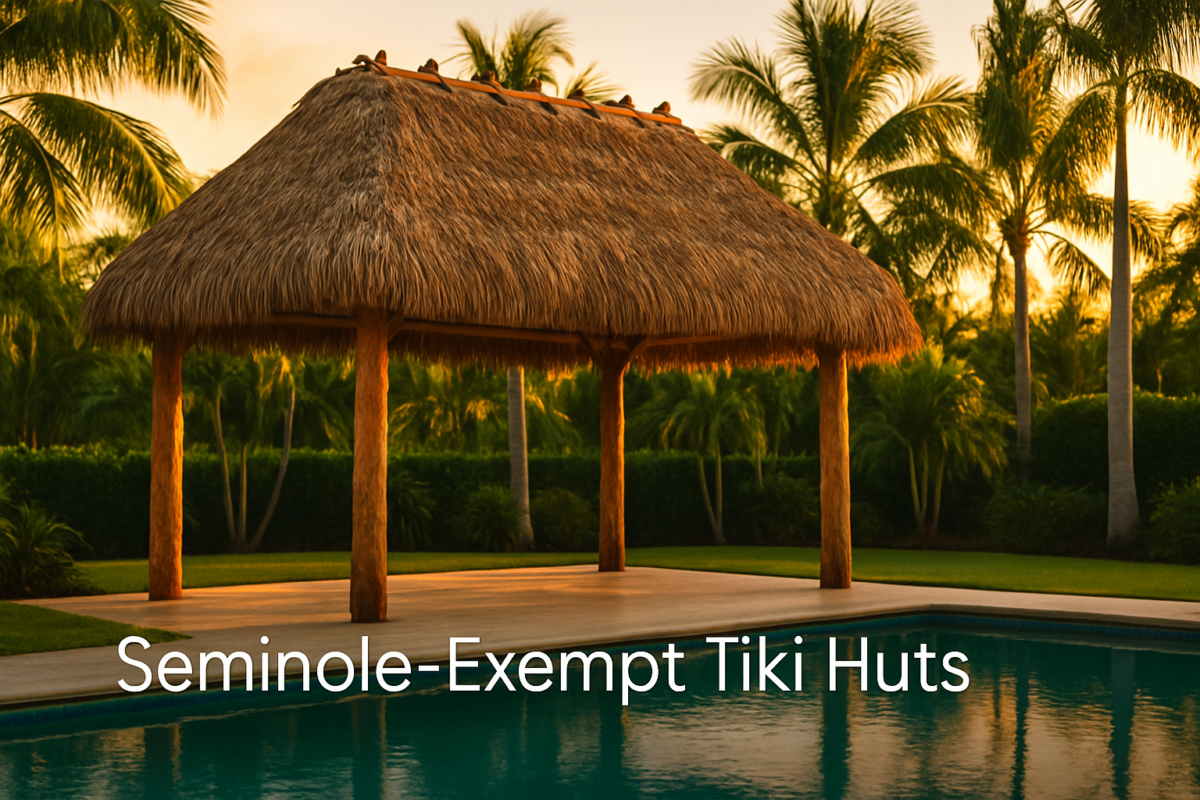
- Materials: We exclusively use authentic cypress wood posts and hand-tied sabal palm fronds, the same materials the Seminole tribe has used for generations. These are built to weather Florida’s sun, rain, and salt air.
- Site conditions: Sandy soil, paver patios, pool decks, seawalls, and rooftop installations all require different anchoring and engineering.
- Add-ons: Bars, ceiling fans, lighting, electrical, granite countertops, mini-fridges, TVs, and audio packages all influence pricing.
- Permits and engineering: South Florida counties require wind-load certified plans for any permanent structure, and Big Kahuna handles every bit of it.
This is also why our tiki hut cost Florida pricing guide always starts with a conversation rather than a calculator. Once we understand your space and how you want to use it, we can quote with confidence.
Average Tiki Hut Pricing by Size
To give you a realistic ballpark, here is what residential builds typically run across South Florida — from Stuart down through West Palm Beach, Jupiter, and Boca Raton — in 2026:
- Small tiki hut (10×10 to 12×12): Roughly $7,500–$11,000. Perfect for shading a hot tub, a fire-pit lounge, or a small patio seating area.
- Medium tiki hut (14×14 to 16×16): Roughly $11,000–$17,000. The sweet spot for most South Florida backyards — fits an outdoor dining table or a sectional with room to breathe.
- Large tiki hut (18×18 to 20×20): Roughly $17,000–$28,000. Great for combined dining and lounge areas, often anchored next to a pool.
- Tiki bar build-out (varies): Add-on bars typically run $4,500–$15,000 on top of the structure cost, depending on counter material, sink/fridge plumbing, and electrical.
- Commercial tiki structures: These are custom-engineered and quoted individually — restaurants, resorts, marinas, and HOAs across Florida have trusted us with builds well into the six-figure range.
These ranges include the structure, authentic cypress framing, hand-thatched sabal palm roof, basic anchoring, and standard finishing. Premium add-ons increase the number, but they also drive the resale and lifestyle value of the project, which is what most clients in our coverage area really care about.
Keep in mind that your tiki hut cost Florida pricing guide numbers will also shift based on access to your property. Waterfront homes in Stuart with narrow side gates, rooftop installations in downtown West Palm Beach condos, and oversized estates in Boca Raton each have their own logistics — and our team has built in every one of those scenarios. We’re happy to walk your property in person or over a video call to spot anything that might influence the final number before we commit to a quote.
One more piece of good news: tiki huts hold their value remarkably well in the South Florida real estate market. Listings featuring an authentic, well-built tiki hut consistently photograph better, sit on the market for less time, and become a memorable feature buyers actually talk about. It’s a rare home improvement that genuinely pays you back in enjoyment and resale.
Custom Tiki Bars: Where the Real Magic Happens
If you’re picturing a real “step out of your house, into the islands” experience, this is the section to pay attention to. Custom tiki bars are the single most-requested upgrade we see in Jupiter, Stuart, and the West Palm Beach corridor — and for good reason. A well-designed bar transforms a backyard from “nice patio” to “weekend destination,” and it dramatically increases how often you’ll actually use the space.
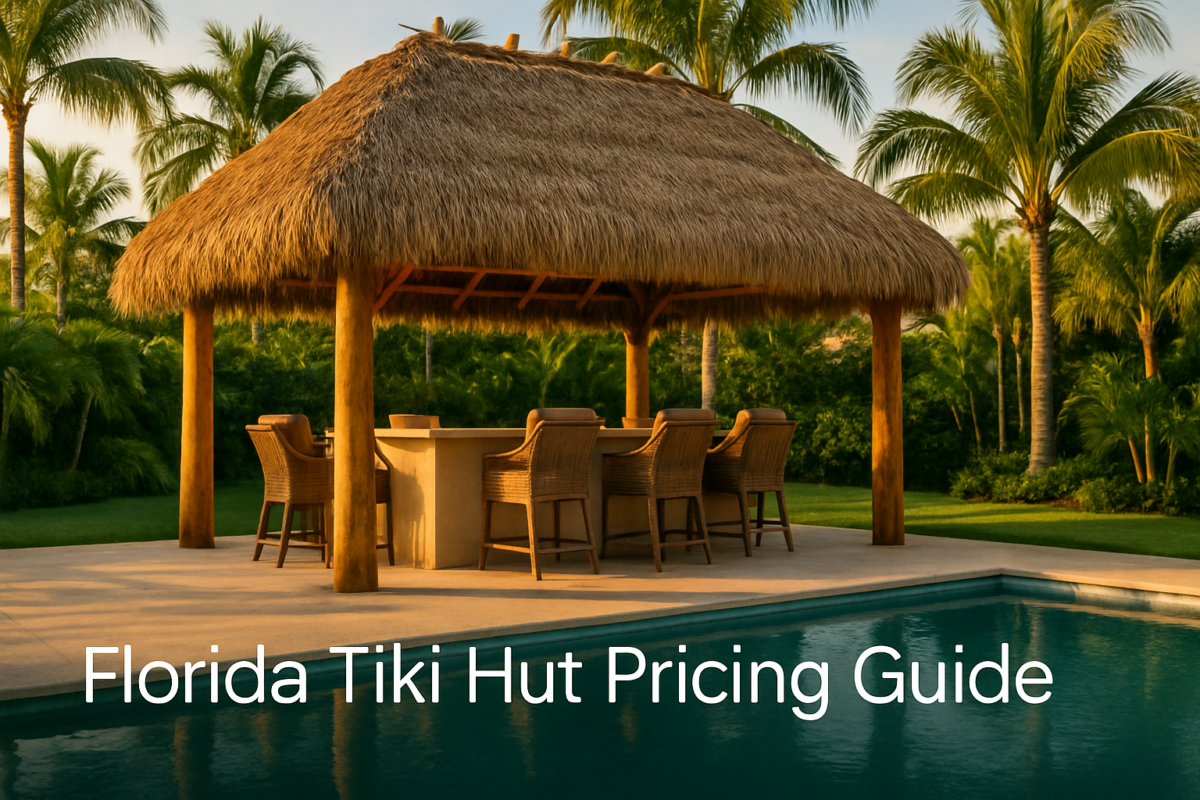
Most full custom tiki bars run between $18,000 and $45,000 once you factor in the hut, the bar build, granite or stone countertops, weatherproof cabinetry, a sink, mini-fridge, ice bin, and outdoor-rated electrical. If you’d like to see real Florida builds at all of these price points, our portfolio is a great way to gauge what’s possible inside your own budget.
For Boca Raton homeowners with covered loggias or screened pool cages, we often recommend a hybrid approach — a custom palapa or thatched-roof bar built into the existing structure. It’s a sneakier way to capture that same island feel at a lower entry cost.
Ongoing Costs and Maintenance to Plan For
A well-built tiki hut is a long-term investment, not a once-and-done purchase, so it helps to budget realistically for the next decade. The roof is the only piece that truly needs attention over time. Authentic sabal palm thatch typically lasts 7 to 10 years on residential structures in the Jupiter and Stuart areas, and slightly less near the immediate oceanfront. A full re-thatch is usually a fraction of the original build cost — most South Florida homeowners can expect to spend between $2,500 and $7,500 depending on the size of the roof when the time comes.
Cypress posts and framing, on the other hand, are remarkably durable. A properly sealed cypress structure can easily last 25 to 30 years with virtually no intervention. Annual care is light: a quick visual inspection after big storms, occasional pressure washing of any decking underneath, and that’s it. Nothing about owning a Big Kahuna build is fussy — and that’s how it should be when you live in paradise.
What Makes Big Kahuna Worth Every Dollar
You’ll find cheaper tiki builders online. We won’t pretend otherwise. What you won’t find easily is what we bring to the table:
- Authentic materials, always. Real cypress posts and sabal palm fronds — never synthetic thatch or pressure-treated lumber dressed up to look the part.
- Decades of Florida-specific experience. We know how Atlantic coast wind events behave, what county inspectors in Palm Beach and Martin look for, and how to anchor a hut so it stays put through hurricane season.
- 3D renderings before construction. You see exactly what your tiki hut will look like in your space before a single post goes in the ground. No surprises.
- Residential and commercial expertise. The same crew that builds a backyard chickee in Jupiter is the team building tiki bars for resorts in the Keys.
- Statewide service. Whether you’re on the Treasure Coast, the Gold Coast, the Gulf side, or the Panhandle, we travel.
If you’d like to learn more about how we got here, the about page tells our story — but the short version is: we love what we do, and it shows in every build.
Getting a Real Quote for Your Southeast Florida Project
Online calculators and ballparks are useful for daydreaming, but the most accurate tiki hut cost Florida pricing guide for your home is the one tailored to your specific address and goals. The good news: getting one is fast, free, and friendly.
When you reach out, our team will walk through what you’re picturing — size, location on the property, intended use (entertaining, shade, hot tub cover, full-on tiki bar) — and then come back with a clear, no-pressure quote. We serve every corner of Florida, with a particularly busy schedule in the West Palm Beach, Boca Raton, Jupiter, and Stuart areas. Head over to our contact page or pick up the phone and let’s start the conversation.
Ready to Bring the Islands Home?
Your backyard is already in paradise — adding a tiki hut just makes it official. Whether you’re after a small shade structure, a showpiece tiki bar, or a fully customized commercial build, Big Kahuna Tiki Huts has the experience, materials, and craftsmanship to make it real.
Call us today at 1-877-249-4038 or visit palmhuts.com for your free quote. Florida sunshine is calling — let’s give you the perfect place to enjoy it.