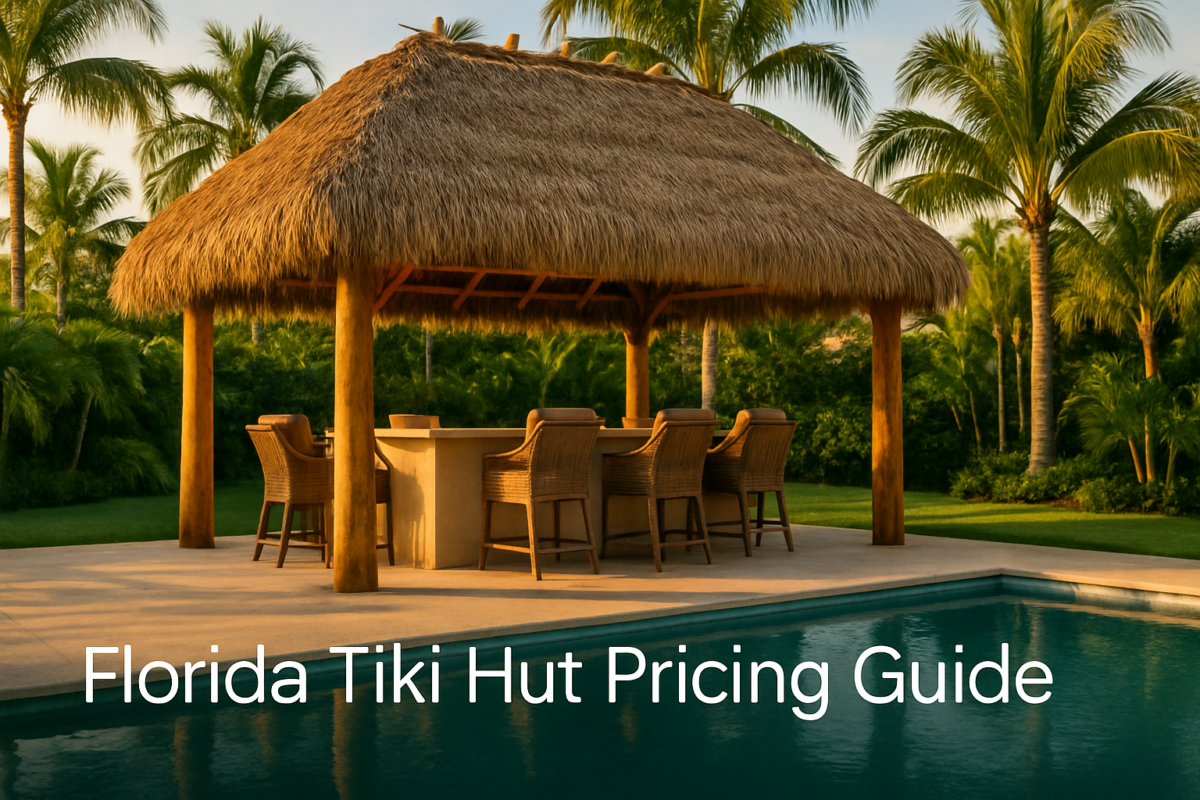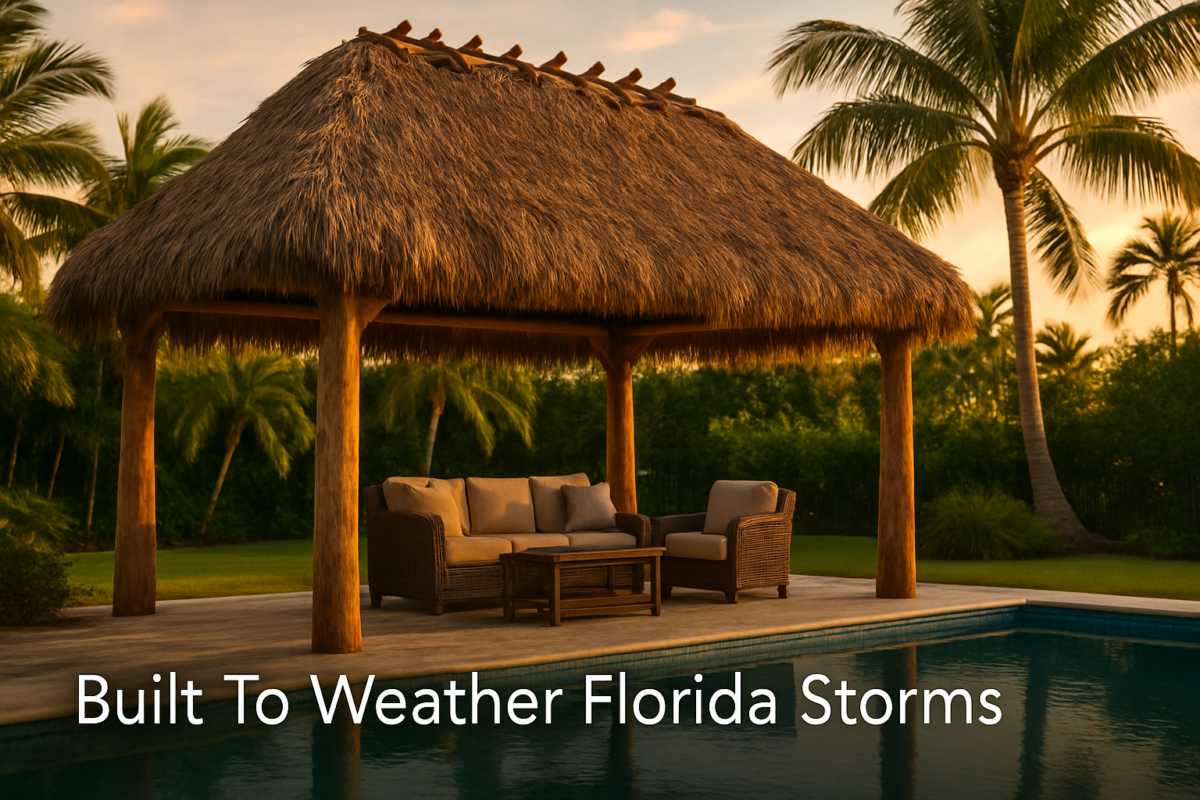
When a tropical system spins up off the coast, every Florida homeowner with an outdoor living space asks the same question: will it survive the storm? If you are dreaming of a backyard chickee or a poolside bar, you want a structure that looks beautiful in the sunshine and stays put when the wind howls. The good news is that a properly engineered tiki hut wind resistant Florida storms hurricane season can throw at it is absolutely achievable — and at Big Kahuna Tiki Huts, it is what we have been building for decades.
Authentic tiki huts have protected people from the elements in Florida for centuries. The Seminole and Miccosukee tribes perfected the chickee long before modern building codes existed, and their wisdom still informs how we build today. In this guide, we will walk you through exactly why our huts hold up, what makes them so resilient, and how homeowners across South Florida can enjoy genuine peace of mind.
Why Authentic Materials Make a Tiki Hut Wind Resistant
The secret to a storm-ready chickee starts with the materials. We build with authentic cypress poles and hand-tied sabal palm fronds — the same natural materials the original Florida tribes used. Cypress is naturally rot-resistant, dense, and remarkably flexible, which means our support poles flex slightly under wind load rather than snapping. That flexibility is a feature, not a flaw: rigid structures fail when they cannot give, while a well-built chickee bends and recovers.
The palm-frond roof is equally clever. Rather than presenting a solid, sail-like surface for the wind to push against, a properly thatched sabal palm roof allows air to pass through the layered fronds. Wind moves over and between the thatch instead of catching it like a kite. This is one of the biggest reasons a traditional tiki hut wind resistant design outperforms what many people expect from a “thatched” structure. Homeowners in Miami and Fort Lauderdale are often surprised to learn that their authentic chickee can handle gusts that would peel shingles off a conventional roof.
There is centuries of proof behind this approach. The chickee design survived in the Everglades precisely because it works in a climate defined by heat, humidity, and powerful seasonal storms. The native builders had no nails, no engineered lumber, and no building codes — just an intimate understanding of how natural materials behave under stress. We have carried that knowledge forward and paired it with modern fasteners, treated footings, and engineered connections. The result is the best of both worlds: the time-tested aerodynamics of a traditional thatched roof combined with the structural reliability today’s homeowners and inspectors expect. When people ask what makes our work different, this blend of authenticity and engineering is the honest answer.
Engineering and Permitting That Stand Up to Florida Storms
Beautiful materials are only half the story. The other half is engineering. Florida has some of the strictest wind-load building codes in the country, especially in the High-Velocity Hurricane Zone that covers Miami-Dade and Broward counties. Every Big Kahuna build is designed to meet or exceed these requirements, with poles set deep into properly poured footings and structural connections that lock the frame together.
We do not guess at depth or spacing. Decades of experience across thousands of installations have taught us exactly how a tiki hut wind resistant Florida storms hurricane conditions demand should be anchored, braced, and tied. When you build with us, your structure is engineered for your specific property, soil, and exposure — not pulled from a one-size-fits-all kit. For homeowners in West Palm Beach and the coastal communities down to Key West, that local code knowledge is the difference between a permit that sails through and a project that stalls.
3D Rendering: See Your Storm-Ready Hut Before We Build
One of the things our clients love most is that they never have to imagine the finished product. Using detailed 3D rendering, we show you exactly how your tiki hut or tiki bar will look on your property before a single pole goes in the ground. You can see the roof pitch, the pole placement, and how the structure sits relative to your pool, patio, or seawall.
This matters for storm resilience too. The rendering process lets us plan the orientation and footprint to work with your site’s wind exposure and drainage, so the finished hut is both gorgeous and grounded. If you have ever browsed our portfolio, you have seen the range of designs we bring to life — from intimate backyard retreats to sprawling commercial installations.
Seeing the design in advance also helps you make confident decisions about size, seating capacity, and added features like built-in bars, lighting, and ceiling fans. We can walk you through how each choice affects both the look and the long-term durability of your structure. For families in Miami and Fort Lauderdale planning a poolside gathering spot, or businesses in West Palm Beach building a signature outdoor space, that clarity removes the guesswork and ensures the finished hut is exactly what you pictured — built to the same storm-ready standard regardless of size.
Residential and Commercial Builds Across South Florida
Whether you are a homeowner in Miami wanting a private poolside escape or a resort manager in Key West needing a centerpiece bar that can weather the season, we have you covered. Big Kahuna builds for both residential and commercial clients across the entire state of Florida. Restaurants, hotels, country clubs, and HOA communities throughout Fort Lauderdale and West Palm Beach trust us because a commercial property simply cannot afford a structure that fails in a storm.
Commercial clients also appreciate that an authentic, well-maintained chickee is an investment that pays off year after year. With periodic re-thatching — a service we provide — a quality tiki hut wind resistant enough for Florida’s climate can last for many seasons of sun, rain, and wind. Maintenance is straightforward, and we are always a phone call away when it is time for a refresh.
Because we serve the entire state, we have built in nearly every coastal and inland condition Florida can present, from breezy oceanfront lots in Key West to protected backyard settings inland. That breadth of experience means we understand how local wind exposure, salt air, and soil conditions affect a build, and we tailor each project accordingly. No two properties are identical, and neither are our huts — each one is engineered for the place it will stand and the storms it may face.
Protecting Your Investment Through Hurricane Season
Even the best-built structure benefits from a little preparation. Before a named storm arrives, we recommend securing or storing loose furniture, umbrellas, and decor that sit under your hut, since flying objects cause more damage than the structure itself ever will. The chickee frame and thatch are built to take the wind; it is the patio cushions and string lights that need a temporary home.
After a storm passes, a quick inspection is wise. Most of our clients find their huts come through tropical weather with little more than a few displaced fronds, which are simple to repair. Because we build with genuine cypress and sabal palm rather than synthetic shortcuts, repairs are clean, authentic, and affordable. That long-term reliability is exactly why so many Florida families choose a tiki hut wind resistant Florida storms hurricane season cannot easily rattle.
How Much Wind Can a Tiki Hut Really Take?
This is the question we hear most often, and it is a fair one. The honest answer is that no responsible builder will promise a structure is invincible against a major hurricane — nothing built by human hands is. What we can tell you is that an authentic chickee, engineered and permitted correctly, is one of the most aerodynamically forgiving outdoor structures you can put on your property. Because wind passes through the layered thatch rather than slamming into a solid roof plane, the forces that tear apart conventional patio covers and pergolas are dramatically reduced.
Our builds are designed to meet the wind-load standards mandated for their location, which in much of South Florida means some of the toughest requirements in the nation. We have watched our huts in Miami, Fort Lauderdale, and West Palm Beach come through tropical storms and the outer bands of hurricanes year after year, and the typical outcome is a few loose fronds rather than structural damage. That track record, built over decades and thousands of installations, is the real measure of a tiki hut wind resistant enough for the Florida coast. When you combine genuine materials, smart engineering, and proper anchoring, you get a structure that respects the power of a storm while still standing proud the morning after.
Build With Florida’s Tiki Hut Experts
From Key West to Miami, Fort Lauderdale to West Palm Beach, Big Kahuna Tiki Huts has spent decades giving Florida homeowners and businesses outdoor spaces that are as tough as they are beautiful. Authentic cypress poles, hand-tied sabal palm fronds, code-compliant engineering, and detailed 3D rendering all come together in a structure you can enjoy with confidence — storm season included.
Ready to bring your backyard paradise to life with a hut built to last? Call us today at 1-877-249-4038 or visit palmhuts.com for a free quote. Learn more about our team and discover why Big Kahuna is Florida’s trusted name in authentic tiki huts and tiki bars. Your storm-ready slice of the tropics is just one call away.