Categories
Tiki Blog

ADA Compliant Commercial Tiki Hut Build: Florida Guide

If you run a restaurant, resort, RV park, or HOA amenity area anywhere in Southwest Florida, your next outdoor project has to clear a hurdle most owners do not think about until a plans examiner brings it up. An ADA compliant commercial tiki hut build is not simply a courtesy to guests who use wheelchairs, walkers, or canes. For most commercial properties it is a federal requirement, and accessibility is one of the most common reasons a gorgeous thatched structure gets flagged at final inspection.

We have been building authentic cypress-pole and sabal palm frond tiki huts across Florida for decades, for backyards and for commercial clients from Naples to Ave Maria. This guide covers what accessibility actually means for an open-air thatched structure, where owners get caught out, and why designing it in from day one costs a fraction of retrofitting it later.

Does Your Commercial Tiki Hut Have to Be ADA Compliant?

The short answer for most business owners is yes. Title III of the Americans with Disabilities Act covers places of public accommodation, which includes restaurants, bars, hotels, resorts, marinas, campgrounds, and retail. If the public can walk into the space and buy something, sit down, or be served, the accessibility rules generally follow. A tiki hut shading a resort pool deck in Marco Island is part of that guest experience, and it is treated accordingly.

A tiki hut in a private backyard is a different animal. Residential builds are not governed by Title III, though your county still has plenty to say about permitting, setbacks, and wind load. The gray zone is community property. Amenity structures at a clubhouse, pool, or common area frequently do trigger accessibility requirements, which is why we walk boards through it carefully when we design commercial tiki huts for HOA communities and condo associations. Short-term rental properties in Naples and Estero can land here too, depending on how the property is operated and marketed.

The governing document is the 2010 ADA Standards for Accessible Design, which Florida layers its own accessibility code on top of. Your local building department is the final word, and we always recommend confirming specifics with them or your design professional before construction.

Four Details That Decide Whether You Pass Inspection

Most accessibility problems on an ADA compliant commercial tiki hut build are not exotic. They come down to four things, and every one of them is far cheaper to solve on paper than in the field.

An accessible route that actually reaches the hut. A guest needs a continuous, firm, stable, slip-resistant path from the parking area or main building to the structure. This is where Florida properties trip up constantly: loose sand, shell, and pea gravel look wonderful around a tiki bar and are not an accessible surface. Compacted stabilized surfacing, broom-finished concrete, or a properly built deck solves it.

Level changes handled correctly. Under the standards, a change in level up to a quarter inch can be vertical, between a quarter and a half inch must be beveled, and anything greater needs a ramp. Ramps run a maximum slope of 1:12 with a maximum rise of 30 inches per run, plus landings. On raised pool decks and elevated waterfront platforms this is the single biggest design driver.

Clear width and maneuvering room. The accessible route wants at least 36 inches of clear width, with room to turn once someone is under the roof. Post spacing matters here, and it is one of the real advantages of a custom build over a kit: we can set the cypress poles where the traffic pattern needs them instead of working around a fixed template.

Counter and table heights. This is the one that surprises tiki bar owners. A standard tiki bar top at 42 inches is not an accessible surface. The standards call for accessible dining and work surfaces between 28 and 34 inches above the floor, with knee clearance beneath, and a portion of seating provided at that height. The usual solution is a lowered section of bar top integrated into the design so it looks intentional rather than bolted on. Done well, nobody reads it as a compliance feature.

One question we field constantly from restaurant and resort owners is how much room is really needed underneath. In practice, if you can move a wheelchair comfortably from the accessible route to a seat at the lowered bar section without weaving between poles, you are in good shape. That usually means planning at least a 36-inch clear path all the way through, a turning space inside the footprint, and knee clearance of roughly 27 inches high and 30 inches wide beneath any accessible table or counter section. Getting these numbers right on the drawing is the whole game.

Accessible Tiki Structures in Naples, Marco Island, Estero and Ave Maria

Southwest Florida throws its own wrinkles into accessible outdoor seating. In Naples, Fifth Avenue and Third Street restaurants are often working in tight, established footprints where an accessible route has to thread past existing landscaping and outdoor dining. In Marco Island, canal-front and beachfront properties frequently sit at flood elevations that force a raised deck, which means a ramp or lift becomes part of the conversation from the first sketch.

Estero is largely new construction, and that is the easy case: when the tiki structure is designed alongside the hardscape, accessibility costs almost nothing extra. Ave Maria, as a master-planned community, tends to have consistent standards across amenity areas, and boards there usually want the tiki structure to match what the rest of the community already meets.

Accessibility also has to coexist with everything else Florida demands of an outdoor structure. Your accessible route cannot conflict with setback requirements by Florida county, and the structure still has to satisfy wind load and tie-down requirements. Those are not competing goals, but they do need to be solved together rather than in sequence. When we produce 3D renderings for a commercial client, the accessible route is drawn in from the start, right alongside the pole layout and the roof pitch, which is also how we approach tiki hut designs for Florida restaurants and resorts.

Storm durability deserves a mention alongside accessibility, because the two get engineered together. A ramp, a raised deck, and the tie-down system all share the same foundation work, and it is far cheaper to pour once. Our approach to tiki hut wind resistance in Florida storms is built into the same structural drawings that carry the accessible route, so an ADA compliant commercial tiki hut build does not quietly compromise the structure to make room for a ramp.

What It Costs, and Where Owners Overspend

Designed in from the beginning, accessibility on an ADA compliant commercial tiki hut build is usually a modest line item. You are adjusting pole placement, specifying the right ground surface, and detailing a lowered bar section. The material cost difference on the structure itself is often minor.

Retrofitting is where the money goes. Pouring a new accessible path after the fact, rebuilding a bar top, or adding a ramp to a deck that was never designed for one can easily cost several times what the same decisions would have cost during design. Worse, a complaint or a failed inspection can shut down the seating area during peak season, and in Southwest Florida the peak season is the whole business model.

The other expensive mistake is assuming an open-air structure is somehow exempt because it has no walls and no door. It is not. If your guests use it, it is part of your facility.

Build It Right the First Time

An ADA compliant commercial tiki hut build is genuinely straightforward when accessibility is part of the design brief instead of a correction. We handle commercial and residential projects across the entire state, we build with authentic cypress poles and hand-tied sabal palm fronds, and we produce 3D renderings so you and your plans examiner can see exactly how the accessible route, the seating, and the structure work together before anyone breaks ground.

If you are planning a project in Naples, Marco Island, Estero, or Ave Maria and want it done properly the first time, call 1-877-249-4038 or request a free tiki hut quote. You can also browse our work and service areas at Big Kahuna Tiki Huts.
Categories
Tiki Blog

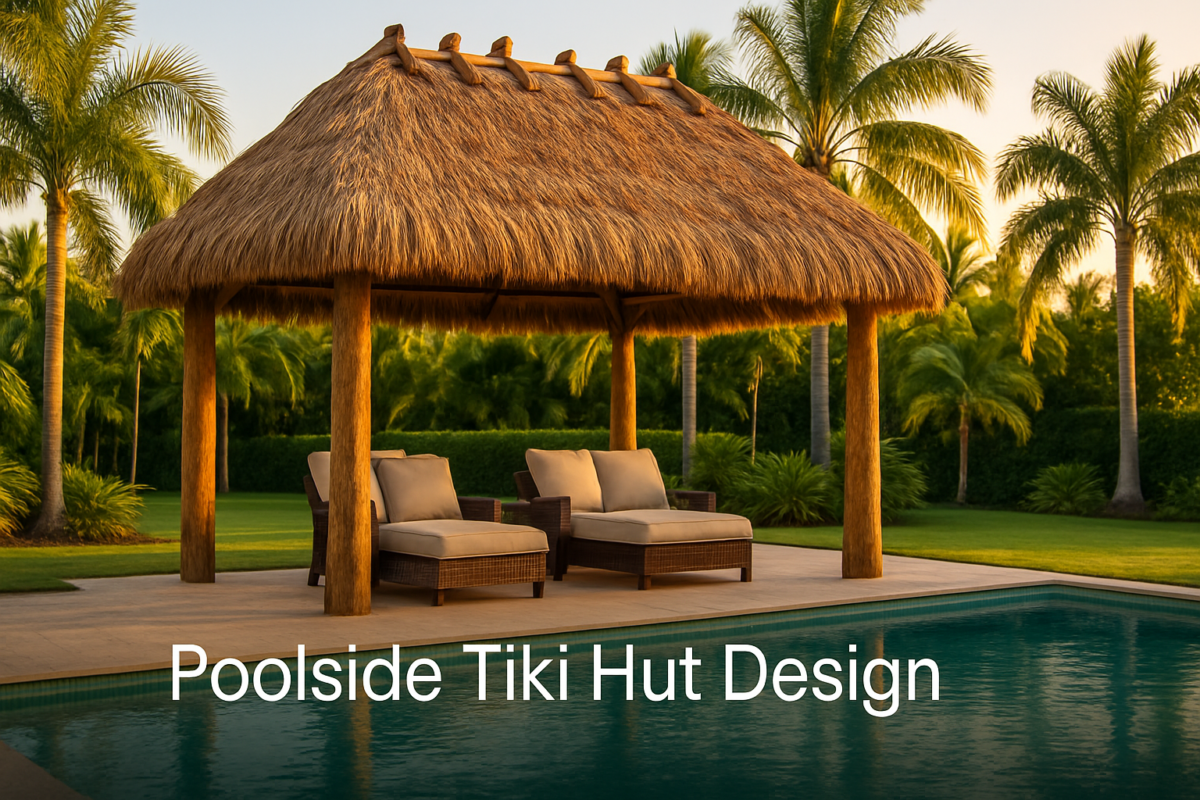
Tiki Hut Pool Deck Ideas in Florida: Permits and Design Made Simple

There’s nothing quite like a Florida afternoon spent poolside — sun on the water, a cold drink in hand, and the gentle rustle of palm fronds overhead. If you’ve been dreaming of turning your pool area into a true backyard escape, a custom tiki hut might be the single best upgrade you can make. But before the first cypress post goes in the ground, smart homeowners across Southwest Florida ask the same question: what does the tiki hut pool deck Florida permits design process actually involve? In this guide, the team at Big Kahuna Tiki Huts walks you through everything — from design inspiration to permitting realities — so your project goes smoothly from blueprint to grand opening.

Why a Tiki Hut Is the Perfect Pool Deck Companion

A pool deck in Florida lives and dies by shade. Without it, that gorgeous travertine surface becomes too hot to walk on by mid-morning, and your guests retreat indoors just when the party’s getting good. An authentic chickee-style tiki hut solves that beautifully. Built from naturally durable cypress poles and topped with hand-tied sabal palm fronds, a tiki hut creates a cool, breezy retreat that’s a solid 10 to 15 degrees cooler underneath — no electricity required.

Beyond comfort, a tiki hut transforms the look of your entire backyard. It anchors the pool area visually, gives you a natural spot for an outdoor kitchen or tiki bar, and adds genuine resale appeal. Homeowners in Naples and Bonita Springs frequently tell us their hut became the favorite gathering spot for the whole family. When you nail the tiki hut pool deck design, you’re not just adding shade — you’re creating an entirely new room for outdoor living.

Design Ideas That Make the Most of Your Space

The best designs start with how you actually want to use the space. Here are a few directions our Fort Myers and Estero clients love:

The poolside lounge. A simple open-air hut with comfortable seating, ceiling fans, and string lighting. It’s the most popular configuration and works on decks of nearly any size. The full tiki bar. Add a built-in bar, mini-fridge, and a couple of stools, and you’ve got a resort experience steps from your back door. The outdoor entertainment hub. Mount a weatherproof TV, run sound, and pair the hut with a grill island for game-day gatherings under the palm fronds.

Scale matters too. A 12-by-12 hut comfortably shades a seating group, while a larger 16-by-20 structure can host a dining table and bar together. Because every Big Kahuna project includes 3D rendering before construction begins, you’ll see exactly how your hut sits against the pool and deck before committing to a single dimension. It takes the guesswork out of design and lets you adjust placement, roof pitch, and pole spacing with confidence.

Understanding Tiki Hut Pool Deck Florida Permits and Design Rules

This is where many homeowners get nervous, but it doesn’t need to be complicated. Permitting for a poolside tiki hut in Florida depends on a few factors: the size of the structure, whether it’s freestanding or attached, its proximity to the pool and property lines, and your local county and HOA requirements. In counties like Lee and Collier, freestanding chickee-style huts are often treated favorably, especially when built by an experienced contractor who understands wind-load and setback codes.

A genuine Seminole or Miccosukee-built chickee can sometimes qualify for special exemptions under Florida law, but most residential huts still require a standard building permit. The key variables in any tiki hut pool deck Florida permits design review are setbacks from the pool’s water edge, electrical work if you’re adding lighting or a TV, and the structure’s ability to meet Florida’s stringent wind codes. The good news? Authentic cypress-and-palm construction, done correctly, has stood up to Florida storms for generations.

Because we’ve handled the tiki hut pool deck Florida permits design process for hundreds of properties statewide, we know exactly what each jurisdiction expects. We’ll guide you on whether your project needs a permit, help prepare the documentation, and make sure your hut is engineered to pass inspection the first time.

Why Authentic Materials and Experience Matter

Not all tiki huts are created equal. The cheap kits you’ll find online use treated lumber and synthetic thatch that fades, cracks, and looks artificial within a season or two. Big Kahuna builds the real thing: hand-selected cypress poles prized for their natural resistance to rot and insects, topped with sabal palm fronds tied the traditional way. The result is a structure that looks authentic, breathes in the heat, and lasts for years with minimal upkeep.

Decades of experience also mean we understand the difference between residential and commercial builds. We’ve created backyard retreats for families in Fort Myers and Naples and large-scale installations for resorts, restaurants, and HOAs across Florida. That range gives us a depth of knowledge most builders simply can’t match — whether your project is a cozy poolside cabana or a sprawling commercial bar.

Bringing Your Pool Deck Vision to Life

Every great backyard transformation starts with a conversation. When you reach out to Big Kahuna, we’ll talk through how you use your pool area, what look you’re after, and any HOA or county considerations specific to Bonita Springs, Estero, or wherever you call home. From there, our 3D rendering brings your concept to life on screen, and our crew handles the build from permit to final palm frond. You can browse completed projects on our portfolio page, learn more about our story on the about page, or get answers fast through our contact page.

A thoughtfully designed tiki hut doesn’t just add shade to your pool deck — it adds years of memories, value to your property, and a little slice of paradise you can enjoy every single day. Once you understand the design options and the tiki hut pool deck Florida permits design process, the path to your own backyard oasis is clearer than you’d think.

Ready to Build Your Backyard Paradise?

If you’re in Fort Myers, Naples, Bonita Springs, Estero, or anywhere across Florida, the team at Big Kahuna Tiki Huts is ready to help you design and build the poolside retreat you’ve been dreaming of. Call us today at 1-877-249-4038 or visit palmhuts.com for a free, no-obligation quote. Let’s bring the island life home — one cypress pole and palm frond at a time.

Categories
Tiki Blog

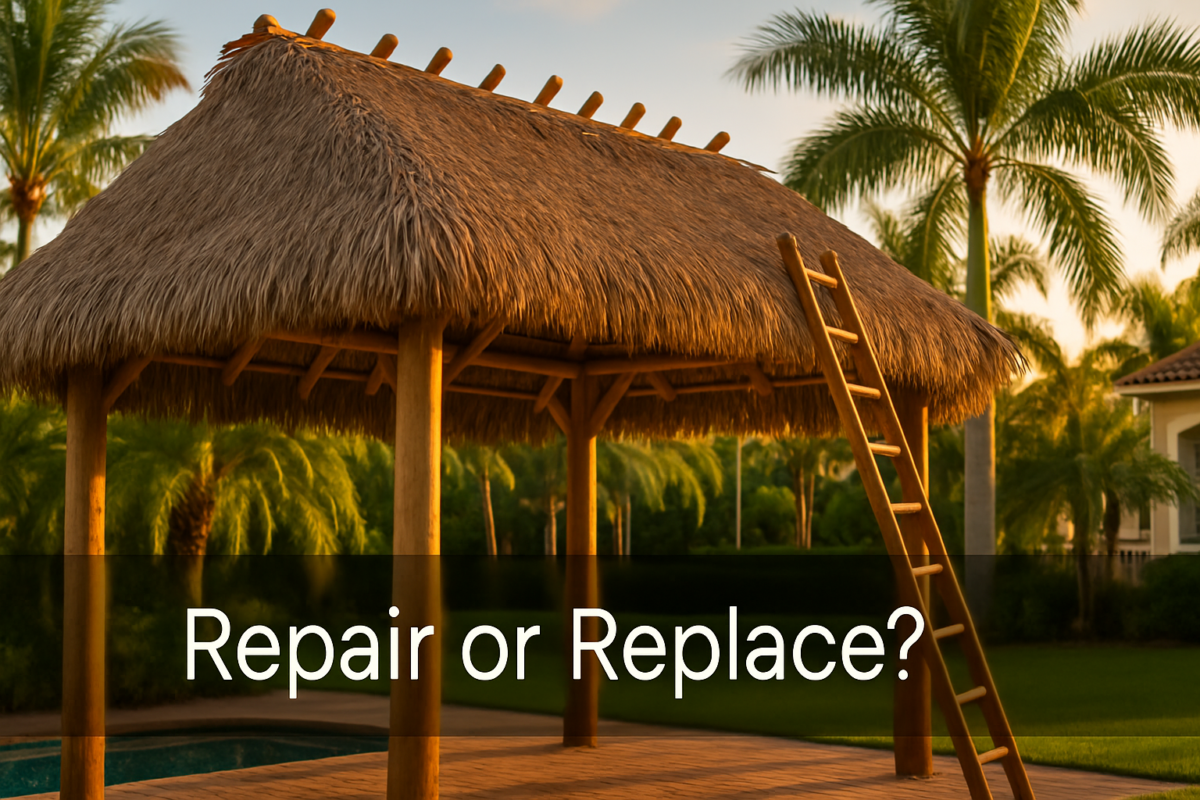
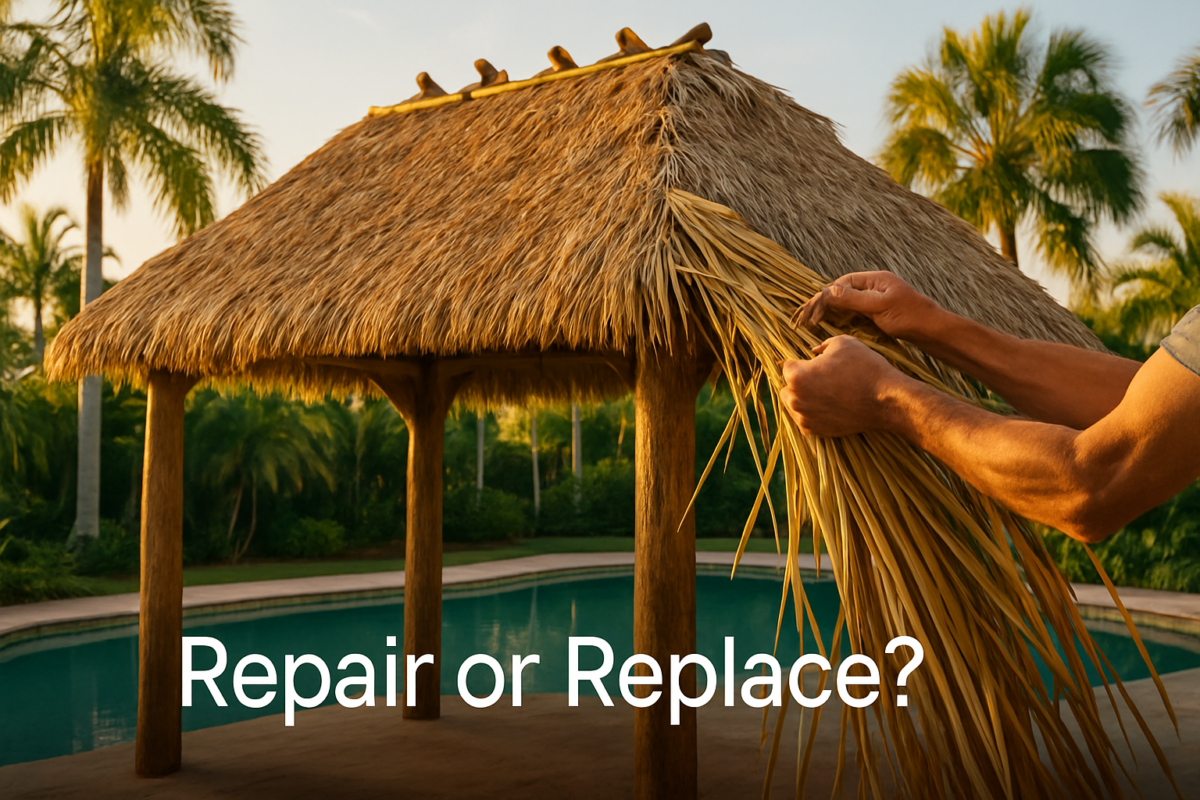
Tiki Hut Rethatching in Florida: When to Repair vs. Replace Your Palm Roof

If you own a tiki hut or tiki bar anywhere from Naples to Fort Myers, you already know how much character a hand-thatched palm roof adds to a backyard, pool deck, or commercial patio. You also know that South Florida’s sun, salt air, wind, and rain are relentless. Sooner or later, every palm-frond roof reaches the point where the question stops being “does it still look good?” and starts being “do I patch it, or replace the whole thing?” This guide on tiki hut rethatching repair in Florida walks you through exactly how to tell the difference — and what to expect either way.

At Big Kahuna Tiki Huts, we’ve been rebuilding and restoring chickee-style roofs across Southwest Florida for decades. We’ve seen what survives a hurricane and what doesn’t, what looks tired but has years of life left, and what’s quietly rotting from the inside. Here’s the same honest framework we use when we walk a property in Naples, Marco Island, Cape Coral, or Fort Myers.

How Long Should a Palm-Frond Roof Last in Florida?

A properly built sabal palm roof typically lasts 7 to 12 years in Florida, depending on three things: the quality of the original thatching, sun exposure, and how close the structure is to salt water. Inland properties tucked under tree cover get the most life; oceanfront commercial properties in Marco Island or beachfront homes in Fort Myers Beach are usually on the shorter end of that window.

Cypress posts and structural framing, on the other hand, can last 25 years or more when properly milled and installed — which is why a roof can wear out long before the bones of your tiki hut need any attention at all. That distinction is what makes rethatching such a smart investment: you’re not rebuilding the hut, you’re refreshing the part that takes the weather.

5 Signs Your Tiki Hut Needs Rethatching Repair

Before deciding between a spot repair and a full re-thatch, take a walk around your hut on a sunny afternoon. Here’s what to look for:

  1. Visible daylight through the roof. Pinholes are normal in a brand-new thatch; large patches of sky are not. If you can see distinct shafts of sunlight on the ground beneath the hut at noon, your fronds have thinned out.
  2. Dripping or “rain dust” after a storm. A healthy palm roof sheds water in sheets. If you’re getting active drips — or fine wet debris falling from above during rain — water is finding paths through the layers.
  3. Brittle, gray, or crumbling fronds along the edges. The bottom rows take the worst of the sun. When they start snapping off in your hand instead of bending, the UV damage is widespread.
  4. Sagging sections or visible “valleys” in the roofline. Sagging usually means the underlying ties have rotted or the fronds above have compressed. Either way, it’s a structural concern, not just a cosmetic one.
  5. Storm damage from a recent named storm. Even a glancing tropical storm can lift edge fronds, break tie-downs, or expose ridge caps. Florida homeowners should get a quick post-storm inspection every season.

If you’re noticing one or two of these and the rest of the roof looks tight, you’re a strong candidate for a targeted tiki hut rethatching repair in Florida. If you’re nodding along to three or more, it’s time to talk about a full re-thatch.

Repair vs. Replace: How the Decision Actually Gets Made

Most homeowners assume that bigger problems automatically mean a full replacement and smaller problems mean a patch. In reality, the decision is driven by three questions:

1. How old is the existing roof? If your thatch is under five years old and you’ve got isolated damage from a single storm or a falling branch, a spot repair is almost always the right call. We can lace in new sabal fronds, retie sections, and color-match the patch so it disappears within a few weeks of weathering. If your roof is already 8+ years old, patching a small area only postpones the inevitable — and you’ll pay for the labor twice.

2. Is the damage at the ridge or along the edges? Ridge damage is serious. The ridge cap is the high point of the roof, and once water gets in there, it travels down through every layer. Edge damage is usually contained to the bottom courses and is much easier to repair without disturbing the rest of the thatch.

3. What’s the structure used for? A residential tiki hut over a poolside lounge area has different priorities than a commercial tiki bar at a Cape Coral marina or a Fort Myers restaurant. Commercial properties usually opt for full re-thatches on a planned schedule rather than emergency repairs, because every day of downtime affects revenue.

What’s Involved in a Professional Re-thatch

A true tiki hut re-thatch isn’t just “throwing new fronds on top.” When our crews show up at a property in Naples or Marco Island, here’s the typical sequence:

First, we inspect the cypress framing. If we find any compromised posts or beams — rare, but it happens — we address those before any thatch goes up. Then we strip the old fronds completely down to the structure. We re-tie the cross-laths with marine-grade fastening, then begin courses of fresh, hand-selected sabal palm fronds from the bottom up, overlapping each row generously so water has no way in. The ridge gets a custom cap, and the edges are trimmed clean for a finished look.

A typical residential re-thatch takes 1 to 3 days, depending on the size and pitch. Commercial structures can run a week or more. In every case, our crews leave the site clean — and your hut looking like the day it was built.

Why Authentic Materials Matter (and Why “Cheap” Rethatching Costs More)

Florida has plenty of contractors who’ll quote you a low number for a palm roof. What you usually don’t see in those quotes is what they’re using: imported synthetic fronds, mexican palm instead of native sabal, or staples instead of hand-tied lashings. Those roofs look fine on day one — and start failing in 18 months.

At Big Kahuna Tiki Huts, every project uses authentic cypress poles and native sabal palm fronds, hand-tied the traditional Seminole way. It’s the same construction method that’s stood up to a century of Florida weather on properties across the state, and it’s the reason our work is approved for both residential and commercial use under Florida’s chickee exemption.

Get a Free, No-Pressure Quote for Your Roof

Whether you’re in Naples, Marco Island, Cape Coral, or Fort Myers — or anywhere else in Florida — the easiest way to know whether you need a repair or a full re-thatch is to have an experienced builder take a look. We offer free inspections and free 3D renderings for new builds, and we’ll give you a straight answer about what your roof actually needs (not what would be easiest to sell you).

Take a look at our portfolio to see recent tiki huts and tiki bars we’ve built and restored across the state, learn more about Big Kahuna, or head straight to our contact page for a free quote.

Call us today at 1-877-249-4038 or visit palmhuts.com to get your tiki hut ready for another decade of Florida living.

Categories
Tiki Blog

Tiki Hut Rethatching Repair in Florida: When to Patch vs. Replace Your Palm Roof

If you own a tiki hut in Southwest Florida, you already know our slice of paradise has a way of wearing things out. Salt air, summer downpours, blazing UV, and the occasional tropical storm all team up against your sabal palm thatch. The good news? A tiki hut roof is built to be revived. The trick is knowing when a quick patch will do and when a full re-thatch is the smarter investment.

After decades of building, refreshing, and rescuing tiki huts from Naples to Marco Island and across Cape Coral and Fort Myers, we’ve seen every stage of palm-roof aging. This guide walks you through what’s actually happening up there, the telltale signs to watch for, and how to decide between a targeted tiki hut rethatching repair Florida homeowners often need and a full rebuild.

How a Florida Tiki Hut Roof Actually Wears Out

A genuine chickee-style hut isn’t just decorative. Hand-tied sabal palm fronds shed rainwater, vent heat, and shrug off humidity — but they’re a natural material, and like any natural material baking under the Florida sun, they have a lifespan.

Three forces drive the aging process. UV exposure dries out the upper layer of fronds, turning them silvery-gray over time. That patina is normal — but underneath, the fibers are slowly losing flexibility. Wind events, especially the Gulf-side gusts that hit Naples and Marco Island during summer storms, work loose the outermost row of palm tips. Once a few fronds break free, water gets behind the remaining layers and accelerates wear. And finally, animal activity — squirrels, birds, the occasional raccoon — can pull individual fronds out as nesting material. One pulled frond won’t sink your roof, but ten will.

The combined effect is gradual. Most well-built tiki huts in our climate need a touch-up every 3 to 5 years and a full rethatching every 8 to 12 years, depending on exposure.

Signs You Just Need a Rethatching Repair

Not every tired-looking tiki hut needs a tear-down. In fact, most of the rethatching calls we get from Cape Coral and Fort Myers turn out to be repairs, not replacements. Here are the signs that point toward a targeted fix:

Localized thinning. If only one face of the roof — usually the windward side — looks patchy while the rest still has body, you almost certainly need a partial tiki hut rethatching repair Florida specialist can blend right into the existing thatch. Done well, the seam disappears within a season.

Small leaks during heavy rain. Pinhole drips in one or two spots usually mean a few fronds have shifted. A trained crew can lift and re-tie the affected section, weave in fresh sabal palm, and have you weatherproof again within a day.

Storm damage. After a tropical system or strong squall, you may notice fronds peeled back at the edges or a lifted ridge. That kind of damage is almost always repairable when it’s caught quickly. The longer it sits open, the more underlying material gets compromised — so the speed of your call matters more than the size of the damage.

If you’re seeing any of these signs in the Naples or Marco Island area, a single-visit repair can save you from a much larger expense down the line.

When Full Replacement Beats Patching

There comes a point where patching only delays the inevitable. Here’s how we know it’s time for a full re-thatch instead of another repair:

Roof-wide thinning. When the thatch has lost its body across the entire structure — you can see daylight through it from underneath, or it has that “tired pillow” sag — patching just adds weight to a structure that’s ready for a clean start.

Repeated leaks in different spots. If you’re chasing leaks every rainy season and they keep popping up in new places, the underlying weave has failed. Layering fresh fronds on top of a failing base traps moisture and shortens the life of the new work.

Old-style construction. Some older tiki huts in Cape Coral and Fort Myers were originally built with non-cypress posts or with thinner thatch density than today’s standards. When you’re already calling for repairs, it’s worth upgrading to authentic cypress poles and a denser sabal palm canopy at the same time. The math almost always favors the upgrade.

Visible structural concerns. Bowing rafters, cracked posts, or rusted strapping mean the issue isn’t just the roof. A full rebuild lets us inspect the bones, replace anything compromised, and re-thatch on a structure you can trust for the next decade.

A complete rethatching project takes 1 to 3 days for most residential huts and gives you a brand-new appearance, full water-tightness, and a reset on the maintenance clock — usually for less than the cost of multiple back-to-back repairs.

How Big Kahuna Approaches Tiki Hut Rethatching Repair in Florida

When our crew rolls into Naples, Marco Island, Cape Coral, or Fort Myers for a rethatching job, the process is the same whether you’ve called for a quick repair or a full replacement.

We start with an in-person inspection. A photo can hint at the issue, but Florida’s salt air and humidity hide damage in ways that only an in-hand evaluation reveals. From there, we walk you through what we found, what’s salvageable, and what isn’t — no upselling, no guesswork.

Authentic materials make the difference. We only use cypress poles and hand-tied sabal palm fronds with proper Florida sourcing. Cypress resists rot in a way pressure-treated lumber simply doesn’t, and authentic sabal palm has a natural oil that sheds water far better than mass-produced synthetic thatch. If your project needs structural work, we’ll also bring 3D rendering to the conversation so you can see exactly what your refreshed hut will look like before we touch a single frond. It’s a small thing that takes a lot of stress out of the decision — and it’s why so many homeowners across Southwest Florida choose us when their tiki hut rethatching repair Florida options feel overwhelming.

Maintenance Tips to Stretch the Life of Your Palm Roof

You can add years to your tiki hut between rethatching jobs with a few simple habits:

Trim back overhanging branches. Anything that drops debris or rubs the thatch is shortening its life. A 4-foot clearance around the entire roof line is a good rule.

Rinse off salt buildup once or twice a year, especially if you’re on the water in Marco Island or near the Gulf in Naples. A garden hose at low pressure is enough — never a pressure washer.

Schedule a quick inspection every 2 to 3 years. We can spot small issues before they become repair-or-replace decisions, and a 30-minute walkaround often pays for itself many times over.

Don’t ignore wildlife. If birds or squirrels are pulling at the thatch, address it early — bird netting along the ridge or a small deterrent can prevent a slow-motion disaster.

These small steps keep your hut looking sharp and push every dollar of your original investment further into the future.

Repair, Replace, or Just Get a Look — We’re Here to Help

Tiki hut rethatching is part art, part craftsmanship, and 100% about understanding the Florida climate it has to live in. Whether your roof needs a touch-up after a stormy season or a full refresh after a decade of faithful service, the right call starts with an honest evaluation. A trustworthy tiki hut rethatching repair Florida partner will tell you when patching is plenty — and when it isn’t.

Big Kahuna Tiki Huts has been building, repairing, and rethatching authentic tiki huts and tiki bars across Southwest Florida — including Naples, Marco Island, Cape Coral, and Fort Myers — for decades. We bring authentic cypress poles, hand-tied sabal palm, decades of field experience, and the same care to a single repair as we do to a full commercial build.

Ready to talk through your project? Call us at 1-877-249-4038 or visit palmhuts.com for a free, no-pressure quote. You can also browse our portfolio to see recent rethatching work, learn more about our team, or contact us directly. Your tiki hut still has plenty of paradise left in it — let’s make sure it stays that way.

Categories
Tiki Blog

Commercial Tiki Huts Are a Real Money Maker for Florida Businesses

If you own a restaurant, resort, hotel, bar, retail shop, or any outdoor-oriented business in Florida, you already know that ambiance matters. Customers don’t just pay for food, drinks, or a place to stay — they pay for an experience. And in a state as competitive as Florida, the businesses that create the most memorable outdoor environments are the ones that win. That’s why commercial tiki huts for Florida businesses have become one of the smartest investments an owner can make — and the ROI speaks for itself.

At Big Kahuna Tiki Huts, we’ve been building commercial tiki structures across Florida for decades. From beachside bars in Fort Myers and waterfront resorts in Naples to retail attractions in Cape Coral and island escapes on Sanibel Island, our commercial tiki huts consistently help businesses attract more customers, increase dwell time, and grow their bottom line.

Why Commercial Tiki Huts Deliver Strong ROI for Florida Businesses

The return on investment for a commercial tiki hut isn’t theoretical — it’s proven. Here’s why Florida businesses keep calling us for more:

Customers stay longer. A shaded, comfortable outdoor seating area under a beautiful tiki roof encourages guests to linger. In the restaurant and bar industry, longer dwell time directly translates to higher per-table revenue. A waterfront tiki bar in Fort Myers that seats 30 additional guests under a custom structure can generate tens of thousands of additional dollars per month during peak season.

You become a destination, not just a stop. A well-built commercial tiki hut is inherently photogenic. Guests post it on social media, tag your business, and bring friends back to experience it. This kind of organic marketing is priceless — and it starts the moment your tiki structure goes up.

Usable square footage without a full buildout. Adding covered outdoor space with a tiki hut is dramatically more cost-effective than an interior expansion or a traditional covered patio. You get functional, revenue-generating space at a fraction of the cost of permanent construction.

What Types of Florida Businesses Benefit Most?

The short answer is: almost any business with outdoor space. But here are the categories where we see the highest impact from commercial tiki huts for Florida businesses:

Restaurants and bars are the most common and highest-ROI use case. Whether you’re adding a tiki bar on an existing patio in Naples or building a full outdoor dining pavilion in Cape Coral, a custom tiki structure immediately elevates the guest experience and expands your covered seating capacity.

Hotels, resorts, and vacation rentals use tiki huts to enhance poolside areas, beach access points, and guest lounge spaces. Our commercial clients include nationally recognized names like Ritz Carlton Hotels, Hyatt Resorts, Wyndham Resorts, and Turnberry Isle — and they keep coming back because the results are undeniable.

Retail and entertainment venues in high-traffic areas use tiki structures to create shaded waiting areas, outdoor checkout or demo spaces, and eye-catching storefronts. On Sanibel Island, where the tourist economy thrives on atmosphere, a distinctive tiki structure can set a business apart from every competitor on the block.

Event venues, marinas, and parks also benefit enormously. A permanent tiki pavilion transforms an open lot into a bookable event space and can open up an entirely new revenue stream with minimal ongoing overhead.

Authentic Materials, Commercial-Grade Construction

Not all tiki huts are created equal — and when you’re investing in a commercial structure, quality and durability are everything. Big Kahuna Tiki Huts builds every commercial project using freshly cut cypress poles and authentic sabal palm fronds for thatch. These materials aren’t just beautiful — they’re proven to withstand Florida’s intense summer sun, salt air, and hurricane-season storms.

We also offer synthetic thatch options for commercial clients who need zero fire-code concerns and minimal maintenance. Both options are built on structural frameworks engineered for commercial load requirements, ADA compliance, and long service life.

Every commercial tiki project begins with a consultation and a 3D rendering so you can see exactly what the finished structure will look like on your property before we break ground. We handle permitting, construction, and final inspection — so you can stay focused on running your business while we handle the build.

Commercial Tiki Hut Maintenance and Longevity

A question we hear often from commercial clients is: how long will it last? The honest answer is that a well-built Big Kahuna tiki hut — maintained properly — can serve your business for many years. Natural sabal palm thatch typically lasts four to seven years before it needs refreshing, depending on your location and exposure to the elements. When that time comes, our commercial rethatching and repair team can have your structure looking brand new with minimal downtime for your business.

We offer commercial maintenance agreements for businesses in Fort Myers, Naples, Cape Coral, and across Southwest Florida that want a set-it-and-forget-it approach. Regular inspections, proactive repairs, and scheduled rethatching keep your tiki structure looking its best year after year — protecting your investment and your brand image.

Southwest Florida’s Tiki Hut Experts: Fort Myers, Naples, Cape Coral, and Sanibel Island

Big Kahuna Tiki Huts has deep roots in Southwest Florida. We’ve completed commercial projects of all sizes across Fort Myers, Naples, Cape Coral, and Sanibel Island, and our team knows the local permitting landscape, zoning considerations, and climate conditions that affect every build in the region.

Whether you’re planning a single tiki bar for your restaurant patio in Fort Myers or a multi-structure resort complex in Naples, we have the experience, the crew, and the craftsmanship to deliver on time and on budget. We serve all of Florida from our Southwest Florida base — so no project is out of reach.

How to Get Started

The process is straightforward. You reach out, we schedule a consultation, discuss your space and goals, and provide a detailed quote along with a 3D rendering of your proposed structure. Most commercial clients are surprised by how quickly the project moves from concept to completion — and even more surprised by how quickly the structure pays for itself.

If you’ve been thinking about expanding your outdoor space, adding a tiki bar, or creating a shaded gathering area that sets your business apart, there’s no better time to act. Florida’s outdoor season runs year-round, and every month without a commercial tiki structure is revenue you’re leaving on the table.

Ready to see the ROI for yourself? Call Big Kahuna Tiki Huts at 1-877-249-4038 or visit palmhuts.com to request your free quote. Our team is ready to help you build something that makes your business unforgettable.

Categories
Tiki Blog

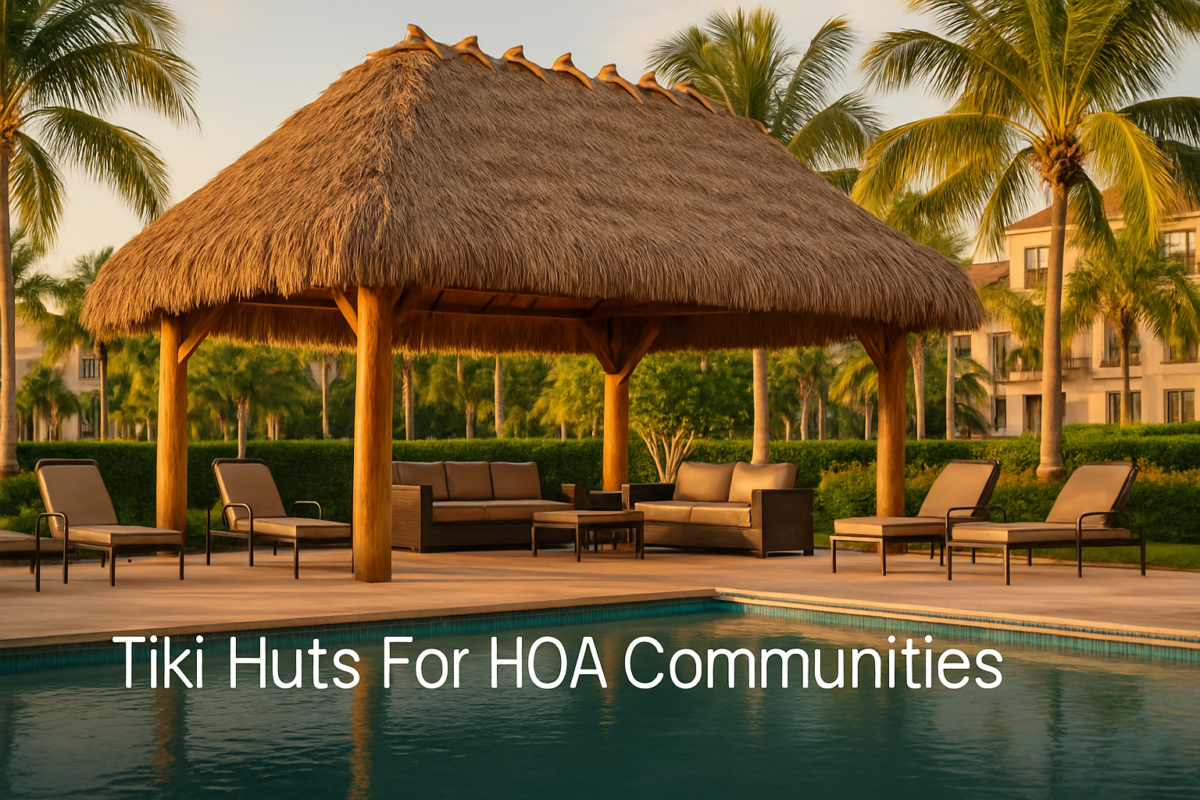
Commercial Tiki Huts for HOA Communities and Condo Associations in Florida

Across Florida, homeowners associations and condo boards are competing harder than ever to attract residents and boost property values. One amenity keeps rising to the top of the wish list: a beautiful, shaded gathering spot that captures the laid-back island lifestyle people move to the Sunshine State for. That is exactly why a commercial tiki hut for your HOA or condo association in Florida has become one of the smartest upgrades a community can make. It is durable, eye-catching, and instantly transforms an ordinary pool deck or common area into a resort-style destination.

At Big Kahuna Tiki Huts, we have spent decades building authentic chickees for communities up and down the state, from Southwest Florida’s coastal condos to inland HOA clubhouses. In this guide, we will walk through why these structures make so much sense for shared spaces, what sets a true commercial-grade build apart, and how we help your board navigate approvals from start to finish.

Why HOA Communities and Condo Associations Are Choosing Commercial Tiki Huts

Shared amenities are the heartbeat of any well-run community. When residents have a comfortable, shaded place to gather, the entire neighborhood feels more connected, and that translates directly into resident satisfaction and stronger property values. A commercial tiki hut delivers all of this with a fraction of the maintenance of a traditional roofed pavilion.

For condo associations along the Gulf Coast, a tiki hut by the pool or boardwalk gives residents a breezy escape from the midday sun without blocking those coveted water views. For inland HOA communities, a chickee over an outdoor kitchen or near the clubhouse creates a natural hub for events, weekend hangouts, and HOA-sponsored gatherings. Choosing a commercial tiki hut for an HOA or condo association in Florida also signals to prospective buyers and renters that the community invests in lifestyle, not just landscaping.

Just as important, these structures are built to handle heavy, ongoing use. Unlike a backyard hut that hosts the occasional family cookout, a community tiki hut sees daily traffic, so it needs to be engineered for the long haul. That is where commercial-grade construction matters. You can see examples of our community installations in our project portfolio.

What Makes a Commercial Tiki Hut Built for Shared Spaces

Not all tiki huts are created equal, and the difference is night and day when a structure has to serve dozens or hundreds of residents. A residential build prioritizes charm; a commercial build has to deliver charm and serious structural integrity.

Every commercial project we take on starts with authentic materials: hand-selected cypress poles for the frame and genuine sabal palm fronds for the roof. Cypress is naturally rot- and insect-resistant, which is critical for structures exposed to Florida’s humidity, salt air, and afternoon downpours. The sabal palm frond roof, hand-tied by experienced thatchers, sheds rain beautifully and keeps the space remarkably cool even at peak summer heat.

For an HOA or condo association, we also scale the design to match expected use. That can mean wider spans for larger crowds, reinforced posts, integrated lighting, ceiling fans, and built-in seating or bar areas. Because we handle both commercial and residential work, we know how to right-size a build so it looks gorgeous and stands up to years of community events.

Navigating HOA Approvals, Permits, and Florida Building Codes

One of the biggest hesitations boards have is the paperwork, and we get it. Adding any structure to a shared community involves architectural review committees, association bylaws, and local permitting. The good news is that we have done this many times and we make the process painless.

Before construction begins, we provide detailed 3D renderings so your board, architectural committee, and residents can see exactly what the finished tiki hut will look like in your space. This visual is invaluable for getting buy-in at community meetings and for securing approval from your HOA or condo association in Florida without the usual back-and-forth.

We also build to code. Authentic chickees enjoy unique status under Florida building regulations, and our team understands the wind-load, setback, and permitting requirements that apply to commercial installations. We coordinate with your property management company and local building departments so your association can move forward with confidence. Have questions about your specific community? Reach out through our contact page and we will walk you through it.

Serving Southwest Florida Communities From Naples to Sanibel

Southwest Florida is one of our favorite regions to work in, and it is home to some of the state’s most amenity-rich communities. We regularly build commercial tiki huts for HOA communities and condo associations across Naples, Fort Myers, Marco Island, and Sanibel Island.

In Naples, gated golf and lakefront communities use our chickees to elevate clubhouse pool decks and resident lounges. Over in Fort Myers, condo associations along the river and Gulf love how a tiki hut frames the water without obstructing views. On Marco Island and Sanibel Island, where the coastal, tropical aesthetic is everything, an authentic palm-frond roof feels right at home and holds up beautifully against salt air and sea breezes. Wherever your community sits, we serve all of Florida, so distance is never an obstacle.

Because we are a Florida company through and through, we understand the regional building requirements, the look residents expect, and the timelines associations work within. That local expertise is part of what makes a commercial tiki hut for your HOA or condo association such a dependable investment.

Design Options and Long-Term Value for Your Community

Part of the appeal of a commercial tiki hut is how flexible it is. We can build a single open-air chickee for a quiet poolside lounge, or a larger structure that anchors an entire amenity zone with an outdoor kitchen, bar seating, and entertainment space. Many associations pair their tiki hut with paver patios, string lighting, and comfortable lounge furniture to create a true outdoor living room their residents return to again and again.

And because these structures use authentic, natural materials, they age gracefully. When the sabal palm roof eventually needs refreshing after years of Florida weather, our re-thatching service restores it to like-new condition for a fraction of the cost of a full rebuild. That long lifespan, combined with low ongoing maintenance, is exactly why so many boards view a commercial tiki hut for an HOA or condo association as a sound, lasting investment rather than a passing trend.

The Big Kahuna Difference

Communities choose Big Kahuna Tiki Huts because we combine old-school craftsmanship with modern professionalism. Our decades of experience mean we have seen and solved virtually every challenge a community project can throw at us. Our 3D rendering process removes the guesswork. And our commitment to authentic cypress poles and sabal palm fronds ensures your tiki hut is the real deal, not a synthetic imitation that fades and disappoints.

We treat every association like a long-term partner. From the first site visit and design concept through permitting, construction, and future re-thatching service, we are there to keep your community’s centerpiece looking its best for years to come. Learn more about our company and the craftsmen behind every build.

Ready to Bring Resort-Style Living to Your Community?

A commercial tiki hut is more than an amenity. It is a gathering place, a property-value booster, and a statement that your community embraces the very best of the Florida lifestyle. Whether you manage a sprawling HOA or a beachfront condo association, Big Kahuna Tiki Huts has the experience, materials, and craftsmanship to bring your vision to life.

Call us today at 1-877-249-4038 or visit palmhuts.com for a free quote. Let’s build something your residents will love for decades to come.