Categories
Tiki Blog

Florida Cypress Poles: The Best Tiki Hut Construction Material

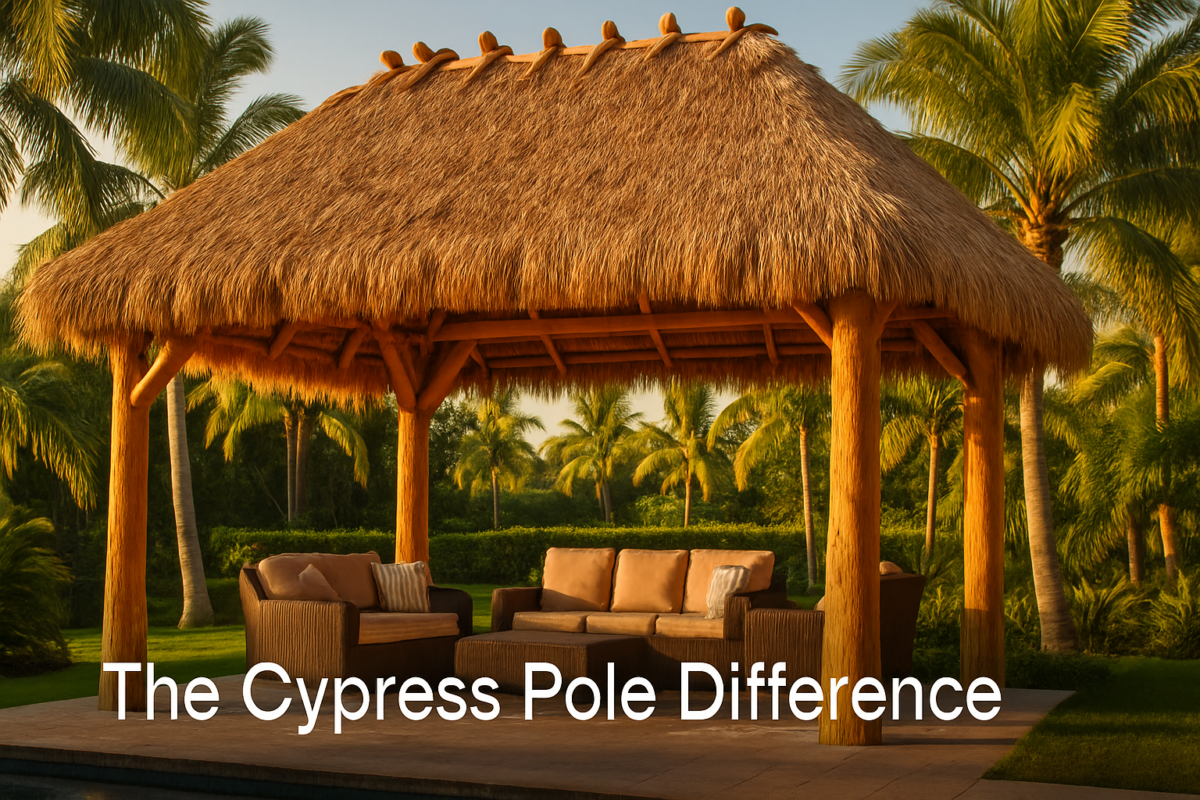
If you’ve ever stood beneath a genuine Florida tiki hut on a hot afternoon, you already know there’s something special about the way it shrugs off the sun and welcomes the breeze. That magic isn’t an accident — it starts with the materials. When it comes to Florida cypress poles tiki hut construction material, there’s a reason builders across the state have relied on cypress for generations. At Big Kahuna Tiki Huts, we’ve built hundreds of authentic chickees and tiki bars from the ground up, and the foundation of every one is the same: real, native cypress.

Whether you’re dreaming of a backyard escape in Jupiter, a poolside bar in Stuart, a shady retreat in Jensen Beach, or a waterfront centerpiece in Port St. Lucie, understanding why cypress matters will help you make a smarter, longer-lasting investment. Let’s dig into what makes this remarkable wood the gold standard.

What Makes Cypress the Ideal Tiki Hut Material

Florida cypress is naturally engineered for our climate. These trees grow in swamps and wetlands, which means they spend their entire lives soaking in moisture — and thriving in it. That gives cypress an inherent resistance to rot, decay, and the relentless humidity that destroys lesser woods. The heartwood contains a natural preservative oil called cypressene, which fends off insects and fungal growth without chemical treatment.

For a structure that lives outdoors in the Florida sun, rain, and salt air year-round, that built-in durability is everything. Choosing the right Florida cypress poles tiki hut construction material means your hut won’t sag, warp, or surrender to termites a few seasons in. It’s the difference between a structure that lasts a decade and one that lasts a generation.

Authentic Cypress vs. Cheaper Alternatives

Not all tiki huts are created equal. Some builders cut corners with pressure-treated pine, imported bamboo, or even pressure-treated lumber dressed up to look rustic. These options may save a few dollars upfront, but they fall short where it counts. Pine rots faster in our humidity, bamboo splits and attracts pests, and treated lumber simply doesn’t carry the authentic, rugged character that makes a tiki hut feel real.

Genuine cypress poles, by contrast, age gracefully. Their natural grain and silvery patina only get more beautiful with time. When homeowners in Port St. Lucie and Jensen Beach ask us why our huts look and feel so authentic, the answer always comes back to the wood. There’s no substitute for the real thing, and our commitment to native cypress is one of the differentiators that has kept Big Kahuna busy across Florida for decades.

Cypress Poles and the Sabal Palm Roof: A Perfect Pair

The cypress frame is only half the story. A true Florida chickee pairs those sturdy poles with a hand-tied roof of sabal palm fronds — the same technique the Seminole and Miccosukee tribes perfected over centuries. The cypress poles provide the strong, weather-resistant skeleton, while the layered palm thatch sheds rain and keeps the space remarkably cool underneath.

This combination is what separates an authentic tiki hut from a flimsy backyard knockoff. When the right Florida cypress poles tiki hut construction material meets expertly woven sabal palm, you get a structure that’s both beautiful and genuinely functional — one that can stand up to Florida storms while delivering that unmistakable island feel. It’s craftsmanship you can see, touch, and trust.

Built to Handle Florida Weather

Homeowners from Jupiter to Stuart often ask us the same question: will it hold up to a hurricane? It’s a fair concern in our part of the world. Properly engineered cypress-pole construction, anchored and permitted correctly, is remarkably resilient. The open design lets wind pass through rather than catching it like a sail, and the deep-set cypress posts provide serious structural stability.

At Big Kahuna, every project is built to meet local codes, and we handle the permitting process so you don’t have to. We’ve spent decades refining how we source, cut, and set our cypress poles, and that experience shows in how our huts perform season after season. When you choose quality Florida cypress poles tiki hut construction material installed by a seasoned crew, you’re investing in peace of mind alongside beauty.

How We Source and Prepare Our Cypress Poles

Quality starts long before construction day. The performance of any tiki hut depends not just on the species of wood, but on how those poles are selected, dried, and prepared. We hand-pick cypress poles for straightness, diameter, and density, because a pole that looks good on the surface can still hide weaknesses if it wasn’t sourced carefully. Decades in this business have taught us exactly what to look for.

Proper preparation also means setting each pole at the correct depth and angle so the frame carries weight evenly and resists shifting over time. This attention to detail is part of why our customers in Jupiter and Stuart see their huts hold their shape and finish year after year. Cheap, rushed installs are where most backyard tiki huts go wrong — and it’s precisely where careful selection of Florida cypress poles tiki hut construction material pays off most. Good wood, set the right way, is the foundation of a hut that ages beautifully.

Tiki Huts and Tiki Bars for Homes and Businesses Alike

Cypress construction isn’t just for backyards. We build for restaurants, resorts, marinas, community pools, and commercial properties throughout Southeast Florida, and the same authentic materials apply at any scale. A poolside tiki bar in Port St. Lucie, a shaded gathering spot for a Jensen Beach community, or a signature entrance feature for a Stuart waterfront restaurant — all of them start with the same dependable cypress frame and hand-tied palm roof. The versatility of the material is part of what makes it so timeless.

See Your Cypress Tiki Hut Before We Build It

One of the things our customers in Jensen Beach and Port St. Lucie appreciate most is that they don’t have to guess what their finished hut will look like. Using 3D rendering, we show you exactly h

Categories
Blog

HB929 and What It Means for Tiki Hut Construction in Florida

If you’ve been following Florida construction news, you may have heard about HB929 — a bill that has significant implications for anyone building or buying a tiki hut in the Sunshine State. Whether you’re a homeowner in Miami dreaming of a backyard paradise, a resort owner in Fort Lauderdale looking to add tropical charm, or a restaurant in West Palm Beach planning an outdoor dining area, understanding Florida HB929 and tiki hut construction is essential before you start your project.

What Is Florida HB929?

HB929 is a Florida House bill that directly addresses chickee hut construction — “chickee” being the traditional name for the open-sided, thatched-roof structures most people know as tiki huts. The bill formally exempts chickees constructed by members of the Miccosukee Tribe of Indians of Florida or the Seminole Tribe of Florida from the Florida Building Code.

This is a big deal. Under HB929, tiki huts built by certified Seminole or Miccosukee tribal members don’t need to go through the standard building code approval process that applies to other construction. The bill also prohibits local counties and municipalities from passing ordinances that would prevent tribal members from constructing these traditional structures. At the same time, HB929 includes important safety provisions — requiring fire-proofing measures approved by a certified fire protection system — and adds criminal penalties for non-tribal members who falsely claim this exemption.

Why the Seminole Exemption Matters for Your Tiki Hut Project

So what does Florida HB929 tiki hut construction law mean for you as a customer? It means that when you choose a Seminole-exempt builder like Big Kahuna Tiki Huts, you’re working with a company that has a unique legal standing in the state of Florida. Our Seminole-exempt status means we can build authentic chickee-style tiki huts using traditional methods and materials — hand-selected Florida native cypress poles and fresh-cut Florida palm fronds — without the bureaucratic delays and additional costs that come with standard building code permitting.

For homeowners in Boca Raton, business owners in Miami, and property managers across South Florida, this translates to faster project timelines, lower overall costs, and a finished product that’s built using centuries-old techniques perfected by the Seminole people. It’s not a shortcut — it’s a recognition that these traditional building methods have proven their worth through generations of Florida weather.

What HB929 Means for Commercial Tiki Hut Projects

Commercial projects benefit enormously from working with a Seminole-exempt tiki hut builder. Hotels, resorts, restaurants, HOA communities, and condo associations across Florida are adding tiki huts and tiki bars to enhance their outdoor spaces. Under HB929, commercial builds by qualified tribal builders can proceed with fewer permitting hurdles — which matters when you’re on a tight renovation schedule or trying to have your new poolside tiki bar ready for season.

Big Kahuna Tiki Huts has built for some of the biggest names in Florida hospitality — Ritz Carlton Hotels, Hyatt Resorts, Wyndham Resorts, and Crowne Plaza Hotels, to name a few. Our commercial clients in Fort Lauderdale, West Palm Beach, and throughout South Florida rely on our Seminole-exempt status to keep projects on schedule and on budget. Whether it’s a tiki village for a resort or a single tiki checkout counter for a beachside shop, the exemption under HB929 keeps the process smooth.

Fire Safety and Placement Requirements Under HB929

One common misconception is that the Seminole exemption means tiki huts have no safety standards. That’s not true. HB929 specifically requires that chickees implement fire-proofing measures approved by a certified fire protection system. At Big Kahuna Tiki Huts, fire safety has always been a core part of our construction process — long before HB929 formalized it.

The bill also sets clear placement requirements. A chickee can be placed in a side yard as long as it’s at least 10 feet from the property line, and it must be at least 10 feet away from any other structure. These straightforward rules make it easy to plan your tiki hut placement whether you’re in a spacious waterfront property in Miami or a cozy backyard in Boca Raton.

How to Make Sure Your Builder Is Legitimately Seminole-Exempt

HB929 includes criminal penalties for anyone who falsely claims the Seminole or Miccosukee exemption. This is an important protection for consumers. When you’re shopping for a tiki hut builder in Florida, you should always verify that the company you’re working with genuinely holds Seminole-exempt status. Unfortunately, some builders claim exemptions they don’t have, which can leave you with a structure that doesn’t meet code and potential legal headaches down the road.

Big Kahuna Tiki Huts is proudly Seminole-exempt, fully insured, and has been serving all of Florida for many years. We’re transparent about our credentials because we know they matter. When you see “Seminole Exempt” on our website and marketing materials, it’s backed by the real thing — and by Florida law under HB929.

Choosing the Right Tiki Hut Builder in the HB929 Era

Understanding Florida HB929 tiki hut construction regulations puts you in a stronger position as a buyer. You know to look for legitimate Seminole-exempt builders. You know that fire safety and placement rules still apply. And you know that working with a qualified builder can save you time and money on permitting.

At Big Kahuna Tiki Huts, we build custom tiki huts, tiki bars, tiki breezeways, tiki awnings, and more for residential and commercial clients across Florida — from Miami and Fort Lauderdale to West Palm Beach, Boca Raton, and everywhere in between. Every structure is custom-built using Florida cypress poles hewn to a smooth blonde finish and topped with fresh-cut Florida palm fronds that are wind and rain resistant.

Ready to start your tiki hut project with a builder you can trust? Get a free quote from Big Kahuna Tiki Huts today and let our team help you design the tropical outdoor space you’ve been dreaming of. Check out our portfolio to see some of the incredible custom work we’ve done for homeowners and businesses all across the Sunshine State.